
Threat Intel
Anatomy of a Multilayer Phishing URL Designed to Evade Security Controls
Recent threat intelligence highlights a phishing campaign utilizing a complex URL structure designed to exploit discrepancies in URL parsing. By combining RFC 3986 userinfo credentials, invalid hostname syntax, and path-based email spoofing, attackers successfully bypass naive security filters while maintaining browser compatibility. Defenders must update detection logic to strictly adhere to WHATWG URL standards.
What Happened
Security researchers analyzed a phishing email featuring a specially crafted URL engineered to evade automated security controls and URL reputation filters. Rather than utilizing standard obfuscation, the link weaponizes parser discrepancies between strict validation tools and modern web browsers.
Technical Breakdown of Evasion Tricks
The malicious URL leverages three distinct techniques to confuse security tooling while ensuring successful delivery to the victim:
- Userinfo Field Manipulation: Utilizing the RFC 3986 userinfo component (credentials before the '@' symbol), attackers insert a unique random string. This defeats exact-match blocklists, acts as a victim tracking token, and tricks simple text parsers into viewing the string as an email address.
- Non-Standard Hostname Syntax: The hostname uses leading and trailing hyphens (violating classic RFC 952/1123 rules), combined with wildcard DNS. While standard browsers resolve it without issue, strict validators and regex-based extractors often flag it as invalid and skip processing entirely.
- Path-Based Email Spoofing: The victim's email address is appended to the URL path. A naive parser or filter splitting on the final '@' symbol might misidentify the host as a trusted internal domain, while browsers correctly parse the actual authority per WHATWG standards.
What Defending Teams Should Do
Defenders and SecOps teams must audit their email gateways and URL analysis pipelines to account for these evasion vectors.
- Ensure all URL extraction and parsing tools fully comply with the WHATWG URL standard rather than relying on regex or custom split functions.
- Update detection rules to flag URLs containing userinfo fields, especially those paired with mismatched or lookalike domains.
- Implement rigorous email authentication (SPF, DKIM, DMARC) and user awareness training focusing on credential harvesting tactics.
Related articles

Deepfake Voice Vishing: AI‑Generated Voices Fuel Large‑Scale Phishing
A new wave of voice‑based phishing attacks uses AI‑generated deepfake voices to impersonate executives and trusted contacts, draining millions from victims. Defenders should verify caller authenticity, enforce voice‑authentication controls, and monitor for suspicious outbound calls.
Read briefing
PIKABOT Loader Update: New Unpacking, Obfuscation, and Phishing Campaigns
Elastic Security Labs uncovered a new PIKABOT loader variant that uses scattered base64 chunks, inline RC4 decryption, and plaintext configuration to evade detection. The campaign delivers the loader via ZIP attachments in phishing emails and launches PowerShell to download the payload. Defenders should block ZIPs from unknown senders, monitor for suspicious PowerShell activity, and update detection rules for the new unpacking pattern.
Read briefing
BlueKit Phishing-as-a-Service Enables Rapid Account Hijacking
BlueKit, a turnkey phishing platform, lets attackers launch sophisticated account‑hijacking campaigns in minutes. The kit includes a command center, tracking, and a library of 97 brand templates. Defenders should block known BlueKit domains, monitor for phishing emails, and harden MFA on high‑risk accounts.
Read briefing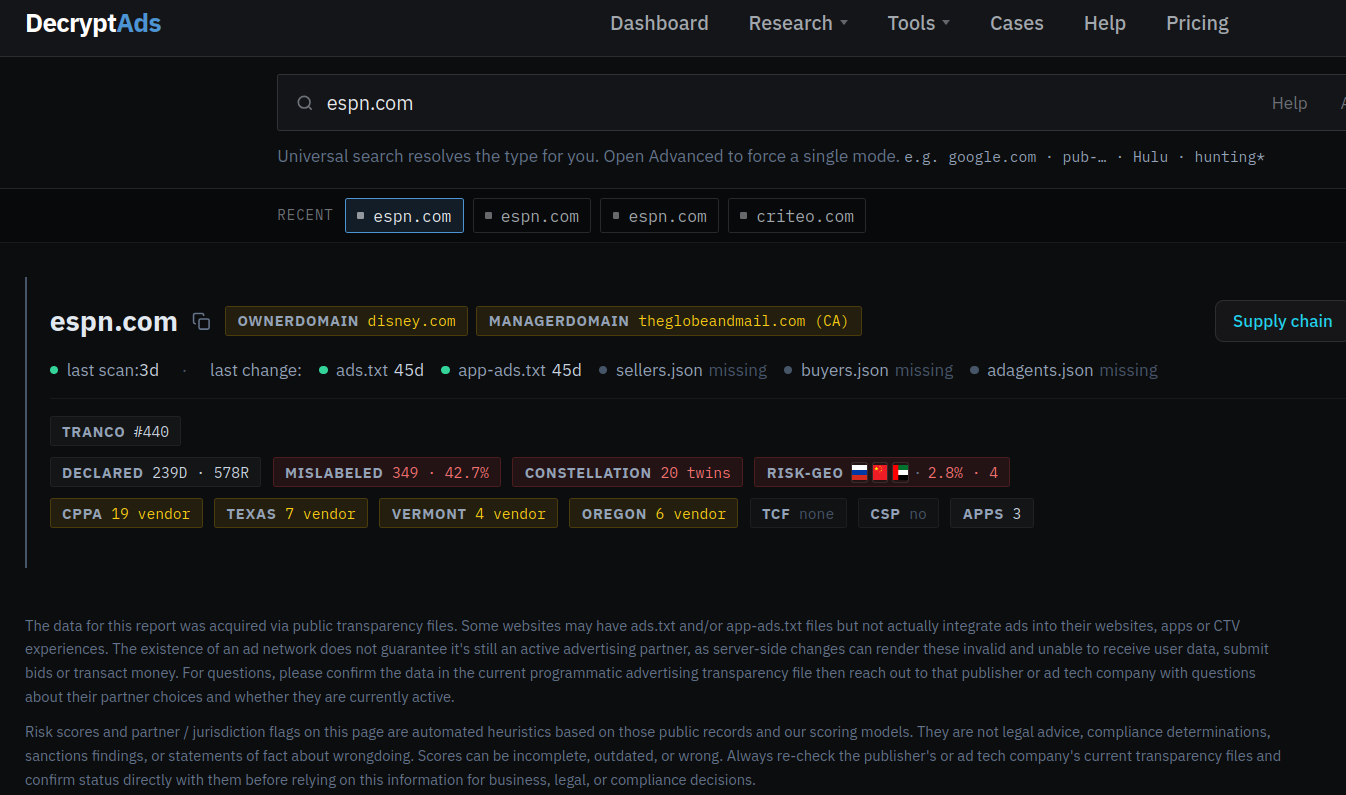
DecryptAds: New Service Maps Adtech Ecosystem for Security Teams
DecryptAds scrapes ads.txt, app‑ads.txt, buyers.json, and sellers.json from sites and apps to build a comprehensive view of who can serve ads or collect data. Security teams can use the data to spot malicious ad networks, adversarial actors, and supply‑chain gaps. The service is free and designed for privacy‑focused threat hunting.
Read briefing