
Vulnerabilities
Plain‑Text Passwords Exposed: How an Unencrypted Credential Leak Triggered a Breach
An attacker leveraged a database of plain‑text passwords to compromise user accounts, demonstrating the critical risk of storing credentials without hashing. Defenders should immediately audit credential storage, enforce hashing, enable multi‑factor authentication, and monitor for credential reuse. Huntress Platform One offers automated detection and remediation for exposed credentials.
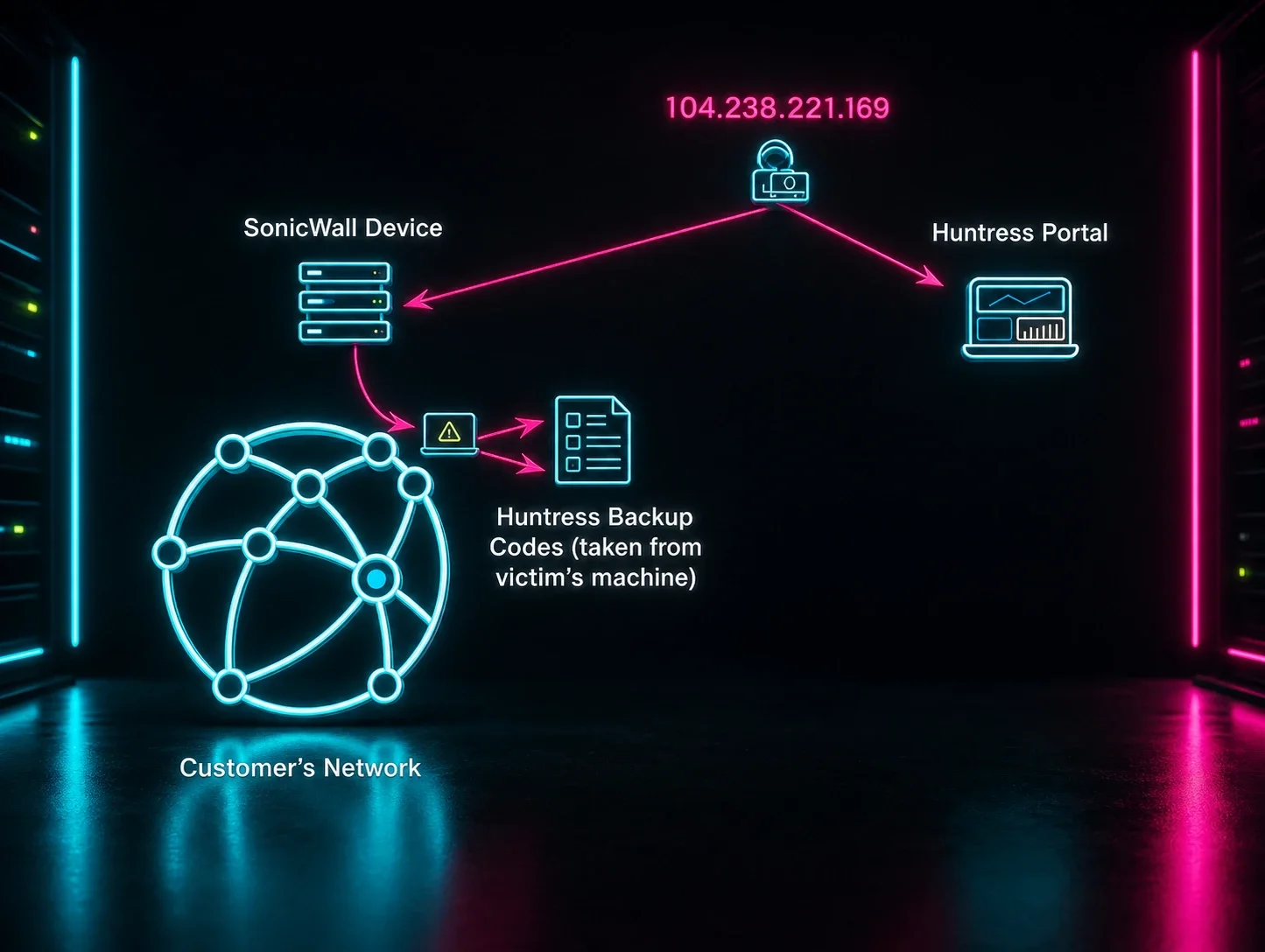
What Happened
An internal database that stored user passwords in clear text was accessed by an attacker who used the credentials to log into multiple services, including an email system and a corporate VPN. The breach was discovered after anomalous login activity was flagged by the security team.
Impact
All accounts associated with the exposed passwords were compromised. Sensitive data was exfiltrated from the email system, and the attacker gained persistence on the corporate network through the VPN credentials.
Mitigation Steps
- Audit all credential stores for plain‑text passwords.
- Replace clear‑text storage with salted, adaptive hash functions (e.g., Argon2, bcrypt).
- Enforce multi‑factor authentication for all privileged and remote access.
- Implement credential‑reuse detection and rotate passwords regularly.
- Deploy endpoint detection and response (EDR) to monitor for credential‑dumping tools.
Huntress Response
Huntress Platform One automatically scans for exposed credentials across endpoints, Microsoft 365, and Google Workspace, and provides actionable remediation steps to harden identity resilience.
Related vulnerabilities

DMDC File‑Sharing Server Breach Exposes 3 Million DoD Personnel Records
The Defense Manpower Data Center (DMDC) confirmed that a security flaw in its file‑sharing system allowed unauthorized users to read unencrypted personal data for roughly nine months. The breach, discovered in mid‑July 2026, exposed PII for about 3 million Department of Defense personnel. Defenders should verify DMDC system patches, monitor for suspicious activity, and review access controls on file‑sharing services.
Read briefing
Chromium CVE-2026-95312: Password Information Leak in Edge
A flaw in Chromium’s password handling can leak credentials. Microsoft Edge users are affected and should update immediately. Defenders should verify patch status and monitor for exposed data.
Read briefing
FortiClient Windows VPN Password Decryption via Hardcoded Key
FortiClient for Windows exposes a hard‑coded key that lets an authenticated local user decrypt stored VPN passwords. The flaw is low severity (CVSS 2.1) but can aid lateral movement. Update the client and disable password saving to mitigate.
Read briefing
CVE-2026-69572: Windows SMB Client Information Disclosure Vulnerability
A flaw in the Windows SMB client can leak sensitive data to local users. The issue is triggered by malformed SMB packets and affects Windows 10/11 and Server 2019/2022. Apply the latest MSRC update or patch to mitigate the risk.
Read briefing