
Threat Intel
When Patching Isn’t an Option: OT Defense in an AI‑Driven Threat Landscape
AI is turning once‑fixed vulnerabilities into a moving target, especially for legacy OT gear that can’t be patched. RootPwn’s briefing breaks down how network segmentation, micro‑segmentation, and next‑generation firewalls can act as virtual patches, keeping critical systems safe even when the code can’t be updated.
AI has turned vulnerability hunting into a relentless, automated process. Every new patch now uncovers another flaw, and the cadence of updates can overwhelm even the most disciplined teams. The result? Many operational technology (OT) systems—medical devices, building controls, industrial control systems—remain locked in a state where a patch simply can’t be applied.
Why the Patch Is Often Out of Reach
OT devices are built to run a narrow set of software, sometimes years old, and often certified only for that exact environment. Updating them can mean losing certification or breaking safety‑critical functions. When a flaw surfaces, there is no straightforward way to fix the code.
Defensive Strategies When the Code Can’t Change
- Visibility First: Identify every legacy asset by its unique network fingerprint. Without a clear inventory, you can’t protect what you don’t know exists.
- Micro‑Segmentation: Isolate vulnerable gear on its own VLAN with strict ACLs. OT systems rarely need to talk to the broader network; keeping them in a private bubble shrinks the attack surface.
- NGFW + IPS Upstream: Deploy a next‑generation firewall before traffic reaches the OT device. Deep packet inspection and up‑to‑date intrusion prevention block exploit attempts before they even reach the vulnerable endpoint.
- Predictability as a Shield: OT traffic patterns are highly regular. Use this predictability to define whitelists and detect anomalies that signal an attack in progress.
“Ignoring the problem and hoping for the best is rarely an effective strategy.” – RootPwn
Even if an OT system is not exposed to the internet, threat actors can infiltrate internal networks and target it. The combination of segmentation and NGFWs turns the “air‑gap” myth into a practical defense: a system can stay offline from the wider network while still receiving legitimate, vetted traffic.
In short, when a patch isn’t an option, the next best thing is to make the system invisible to attackers, tightly control who can talk to it, and filter every packet with a modern firewall. That layered approach is the new standard for protecting the unpatchable in an AI‑driven world.
Related vulnerabilities
CrowdStrike Unveils the Agentic SOC: AI‑Powered Defense for the Modern Threat Landscape
CrowdStrike’s latest rollout redefines the SOC with a network of autonomous agents that learn, reason, and act on data owned by the customer. Leveraging on‑device AI for instant data classification, the platform now blocks supply‑chain attacks, streamlines incident response, and integrates next‑gen identity controls—all while keeping the human analyst in the loop.
Read briefing
CrowdStrike Unveils Agentic Identity Provider: AI Agents Get Trusted Identities
CrowdStrike has rolled out an Agentic Identity Provider that assigns each AI agent a unique, verifiable identity and enforces real‑time, context‑aware access controls. The move tackles the escalating risk of AI‑driven attacks while tightening privileged access management. Part of the firm’s next‑generation identity security roadmap, the solution promises tighter governance for AI tools and a smaller attack surface.
Read briefing
Ransomware Landscape Shifts: Q2 2026 Report Highlights Growing Competition and AI‑Accelerated Ops
Check Point Research’s Q2 2026 ransomware report shows the ecosystem is still dominated by a handful of RaaS groups, but the tail is widening: 93 active actors now versus 71 in Q1, with the top 10 accounting for 57.6 % of victims (down from 71 %). Victim numbers stayed flat quarter‑on‑quarter, yet the US share dropped to 42 % as new groups like The Gentlemen and Krybit target fewer American targets. The Gentlemen’s internal leak revealed an AI‑powered ransomware‑management panel built in three days, marking the first hard evidence that generative‑AI is speeding up malicious tool development. P
Read briefing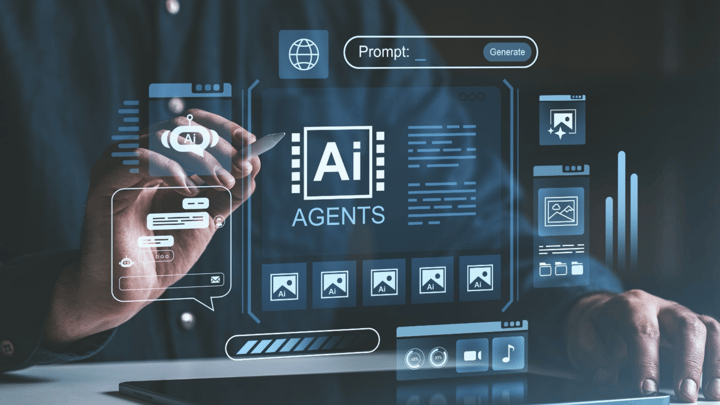
AI‑Powered Attack Slashes Two‑Week Breach to 10 Hours
In a recent incident, a human attacker leveraged frontier AI agents to infiltrate an enterprise network in under ten hours—drastically cutting the typical two‑week timeline. The coordinated bot‑team harvested credentials, seized root, hijacked CI/CD pipelines, and even weaponized the victim’s own AI tools. The breach left an 80‑page audit of the target’s defenses, underscoring how AI‑driven orchestration can turn a single operator into a rapid, multi‑specialist red team.
Read briefing