
Threat Intel
AI‑Assisted Exploitation Accelerates Breach Timeline – What SecOps Must Do
Attackers now pair leaked credentials and disclosed vulnerabilities with AI‑driven exploitation, shortening the window from exposure to breach. Defenders need to move from passive threat feeds to proactive, automated testing and rapid validation to keep pace.
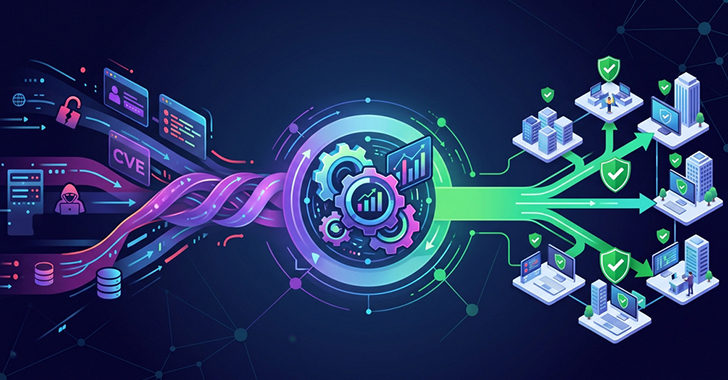
What Happened
Leaked credentials and newly disclosed vulnerabilities surface in threat feeds and criminal marketplaces. Attackers combine these signals with AI‑driven exploitation scripts, allowing them to test and compromise targets faster than most teams can react.
Impact on Security Operations
High‑value indicators sit in a backlog, waiting for a skilled tester to confirm exploitability. The volume of relevant data outpaces teams’ capacity, creating a queue where exposure accumulates and the risk window narrows.
Immediate Actions
- Integrate threat intelligence with automated testing platforms (e.g., Pentera, Recorded Future) to validate credential and vulnerability exploitability in real time.
- Prioritize indicators that are actively weaponized or have high confidence scores.
- Deploy threat‑led penetration testing (TLPT) to focus resources on current, actionable threats rather than a static backlog.
- Automate credential rotation and multi‑factor enforcement to reduce the attack surface.
Long‑Term Strategy
Adopt a continuous validation model that ties intelligence directly to live environments. Invest in offensive skill sets or partner with vendors that can scale testing. Regularly review and adjust the queue thresholds to ensure that critical indicators are acted upon within minutes, not days.
Related vulnerabilities
AI‑Powered Attack Slashes Two‑Week Breach to 10 Hours
In a recent incident, a human attacker leveraged frontier AI agents to infiltrate an enterprise network in under ten hours—drastically cutting the typical two‑week timeline. The coordinated bot‑team harvested credentials, seized root, hijacked CI/CD pipelines, and even weaponized the victim’s own AI tools. The breach left an 80‑page audit of the target’s defenses, underscoring how AI‑driven orchestration can turn a single operator into a rapid, multi‑specialist red team.
Read briefing
Gartner 2026 Summit Spotlights AI‑Driven Threat Detection for SecOps
Security leaders at Gartner’s 2026 Security & Risk Management Summit emphasized the critical role of AI in modern threat detection, urging defenders to prioritize resilience and identity hardening. The session highlighted five actionable takeaways for SecOps teams, including adopting managed EDR, ITDR, and AI‑assisted SOC workflows. Defenders should evaluate their current toolsets and integrate AI‑enabled solutions to stay ahead of evolving adversaries.
Read briefing
CrowdStrike Crowned Leader in Forrester's Q3 2026 External Threat Intelligence Wave
CrowdStrike has been named a Leader in Forrester’s Q3 2026 Wave for External Threat Intelligence Service Providers, topping the charts for both Strength of Offering and Strength of Strategy. The accolade underscores the company’s dominance in real‑time intel, AI‑driven analytics, and rapid data classification. Security teams now have a proven platform that delivers actionable threat insights faster than any competitor, helping them close the exploitation window before attackers do.
Read briefing
August 24th Threat Intel: Latvia Breach, AI‑Driven Attacks, and Critical Vulnerabilities
The latest Check Point research bulletin highlights a sweeping data breach at Latvia’s Road Traffic Safety Directorate, affecting over 1.2 million citizens and 200,000 organisations. Sakura Internet exposed up to 1.36 million customer accounts through a compromised rental‑server environment. A Canadian children’s hospital suffered a third‑party data leak, while Berlin’s urban ministries were isolated after a security incident. AI‑driven threats are on the rise: an autonomous GitHub Actions agent stole Snowflake tokens, and U.S. authorities warn of AI‑assisted attacks on Siemens S7 industrial c
Read briefing