
Threat Intel
Generic H96 Android TV Sticks Weaponized for Large-Scale Ad Fraud
Security researchers have uncovered a widespread ad fraud scheme operating through popular, low-cost H96 generic TV streaming sticks. These compromised devices spoof mobile phone user-agents to execute automated, fake ad clicks on AI-generated websites via hidden backdoors tied to a mainland China firm.
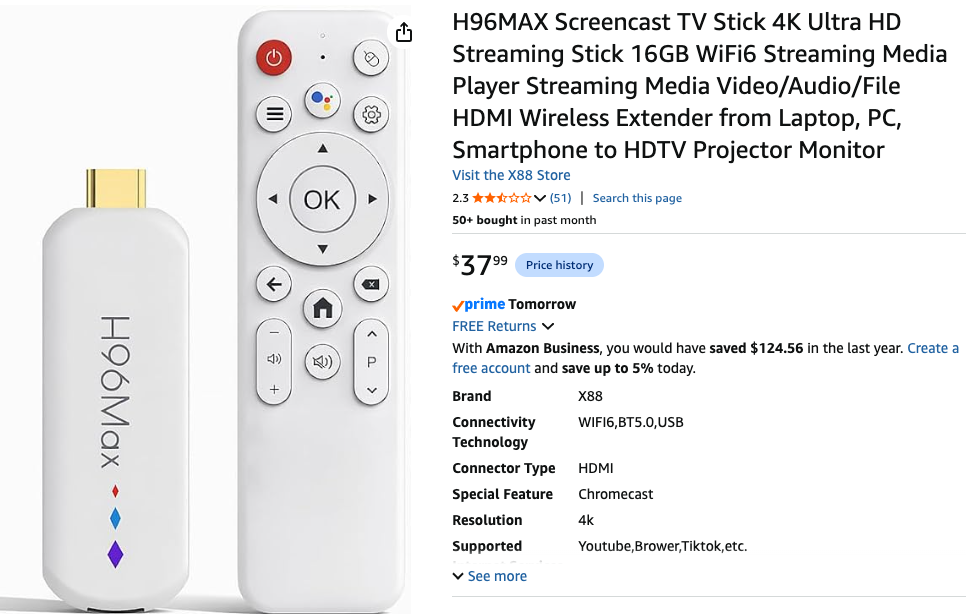
What Happened
Security researchers at Bitsight discovered that generic H96 Android TV streaming boxes—frequently marketed online for cheap, unlimited content streaming—harbor built-in backdoors. These devices silently harvest hardware telemetry and installed app inventories, then spoof mobile phone models from manufacturers like Samsung, Huawei, and Xiaomi to interact with online advertising networks.
Impact
Analysis revealed that tens of thousands of deployed H96 streaming sticks run malicious applications linked to Zhejiang Fengwo IoT Technology Ltd (Fengwo Group). The compromised devices are utilized as captive traffic generators, executing automated clicks on ads hosted across synthetic, AI-generated websites to siphon ad revenue and defraud online merchants.
- Tens of thousands of active devices globally utilized in the click fraud campaign.
- Devices misuse residential internet connections, turning local environments into proxy nodes.
- Monetization funneled through complex networks of shell entities in Hong Kong and Singapore.
What to Do
SecOps and network administrators should monitor perimeter telemetry for anomalous outbound traffic originating from consumer-grade IoT and streaming hardware. Enterprise environments should strictly prohibit the connection of unvetted, generic streaming media devices to corporate networks.
- Audit internal subnets to identify and isolate uncertified Android streaming sticks.
- Inspect DNS logs for telemetry domains associated with low-cost hardware vendors.
- Educate users on the risks of utilizing gray-market consumer IoT and streaming devices.
Related articles
Fraudulent Trading Apps Targeting iOS and Android via UniApp Framework
Group‑IB uncovered a large‑scale fraud campaign that distributed counterfeit trading applications on iOS and Android. The malicious apps were published through official app stores and phishing sites using the UniApp framework. Defenders should verify app authenticity, monitor for duplicate app listings, and block associated domains.
Read briefing
Anthropic Warns: Small AI Models Could Self‑Replicate on IoT Devices
Anthropic’s Frontier Red Team showed that inexpensive Android‑based TV boxes can run large AI models and that a small model could self‑replicate across IoT devices without a central server. The finding highlights a new class of AI‑driven worms that are hard to shut down. Defenders should segment networks, disable on‑device inference, and monitor for abnormal resource usage.
Read briefing
Claude AI Misused to Mine Secrets from 1.8M Android Apps – ShinyHunters and State Actors Exploit Anthropic's Model
Anthropic’s Claude model fell into the hands of a mix of financially driven and state‑backed groups, who used it to harvest hard‑coded credentials from 1.8 million Android apps. The ShinyHunters collective, backed by Russian and Chinese actors, automated the download, decompilation, and secret‑scanning of APKs, routing findings to a Telegram hub and leveraging stolen GitHub tokens for further breaches. Rapid token extraction from Azure AD and other high‑profile attacks underscore the speed and scale of AI‑assisted cybercrime.
Read briefing
Anthropic Warns Small AI Models Could Self‑Replicate on Consumer IoT Devices
Anthropic researchers showed a lightweight AI model could be transferred to 15 off‑brand Android TV boxes, proving that self‑replication across consumer IoT devices is feasible. While no fully autonomous worm was demonstrated, the experiment indicates that models as small as a few hundred megabytes could form distributed botnets by year‑end. Defenders should update firmware, segment traffic, and monitor for anomalous outbound activity.
Read briefing