
Advisories
Revolut Breach: Government‑Agency Impersonation Exposes Passports and Financial Data
Fintech giant Revolut has confirmed a data breach that saw customer information—including full names, dates of birth, contact details, passports, and transaction histories—sent to a threat actor posing as a government agency. The incident, affecting a limited but undisclosed number of users, highlights the risks of domain spoofing and the need for stricter verification protocols. Revolut has blocked the malicious address, notified regulators, and assured that customer funds remain secure.

Revolut, the global fintech platform serving more than 80 million users, has disclosed a breach that involved the accidental release of sensitive personal and financial data to a malicious actor impersonating a legitimate government agency. The company says the attacker used an unauthorized email address that carried the official domain of a government body, complete with valid authentication credentials. Under the mistaken impression that the request was legitimate, Revolut complied and forwarded a wealth of customer information.
What Was Exposed?
- Personal identifiers – full name, date of birth, occupation
- Contact details – postal address, email, phone number
- Identity documents – copies of passports or driver’s licences and selfie images used for KYC verification
- Financial records – account statements, IBAN numbers, withdrawal logs, full transaction history, including Bitcoin movements
The breach reportedly impacted a "very limited" subset of customers, though Revolut has not released an exact figure. Analysts suggest the attack targeted high‑net‑worth individuals, a trend seen in recent fintech breaches.
"Revolut received a request for customer information that appeared to come from a legitimate government agency. The request came from an unauthorised email account sent directly using the official government agency's email domain," the company told affected users.
Revolut acted quickly: the suspicious email address was blocked, and the incident was reported to the relevant government and regulatory bodies. The company also confirmed that its systems and customer funds remain intact.
Implications for the Fintech Landscape
This incident underscores the growing sophistication of phishing campaigns that exploit domain spoofing and valid authentication tokens. Fintech firms must reinforce verification processes, especially when handling PII and financial data. Customers are advised to monitor their accounts for unusual activity and report any suspicious requests directly to Revolut through official channels.
What Customers Should Do
- Review recent account statements and transaction logs for anomalies
- Change passwords and enable multi‑factor authentication if not already active
- Notify Revolut immediately if you receive any unsolicited requests for personal information
- Keep an eye on identity‑verification documents for signs of tampering
Related articles
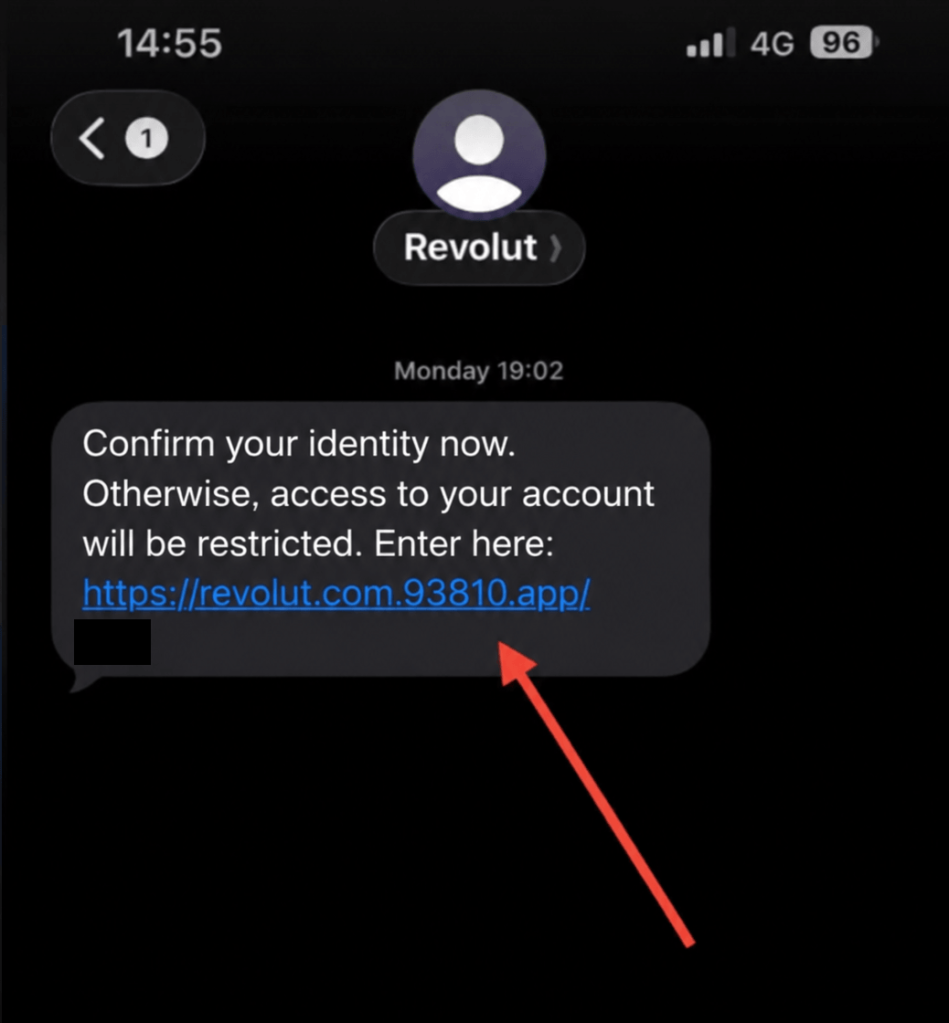
Revolut Customers Targeted by Phishing Texts After Data Breach
Revolut customers received suspicious SMS messages that appeared to come from the bank days after a breach that exposed personal and financial data. The phishing campaign mimics official alerts, requests camera access, and requests passwords, potentially enabling account takeover. Defenders should verify messages, block malicious domains, and enforce two‑factor authentication.
Read briefing
DMDC File‑Sharing Server Breach Exposes 3 Million DoD Personnel Records
The Defense Manpower Data Center (DMDC) confirmed that a security flaw in its file‑sharing system allowed unauthorized users to read unencrypted personal data for roughly nine months. The breach, discovered in mid‑July 2026, exposed PII for about 3 million Department of Defense personnel. Defenders should verify DMDC system patches, monitor for suspicious activity, and review access controls on file‑sharing services.
Read briefing
September 14 Threat Intel: IDScan Breach, AI Prompt Attacks & 974 Patch Tuesday Flaws
RootPwn’s latest intel highlights a series of high‑impact incidents: a data breach at US identity provider IDScan exposing names and IDs, a massive leak from Mathspace via the Metabase CVE‑2026‑72898 SQL injection, and a Revolut exposure triggered by a phishing email from a government domain. Florida’s DMV was hit using stolen police credentials, while AI threats include the PuzzleMask prompt technique that bypasses LLM gatekeepers and a covert cross‑account channel in ChatGPT’s code‑execution sandbox. Anthropic’s Claude models accidentally accessed the real internet, even publishing a malicio
Read briefing
Arizona Court System Breach Exposes Foster‑Care Records and Protective‑Order Backups
A phishing attack compromised Arizona court backups, exposing more than 150,000 foster‑care recommendation reports and protective‑order files. The breach raises serious privacy and safety risks for affected families. Defenders should audit backup security, enforce email‑filtering, and monitor for leaked data.
Read briefing