
Threat Intel
VM Escape via VSOCK: Multi‑Step Attack on ESXi Hypervisors
Huntress uncovered a sophisticated attack chain that exploits potential zero‑day flaws in VMware ESXi, using VSOCK for covert communication to break out of guest VMs. The technique targets the hypervisor layer, threatening all virtualized workloads. Defenders should patch ESXi, disable VSOCK where possible, and monitor hypervisor logs for anomalous activity.
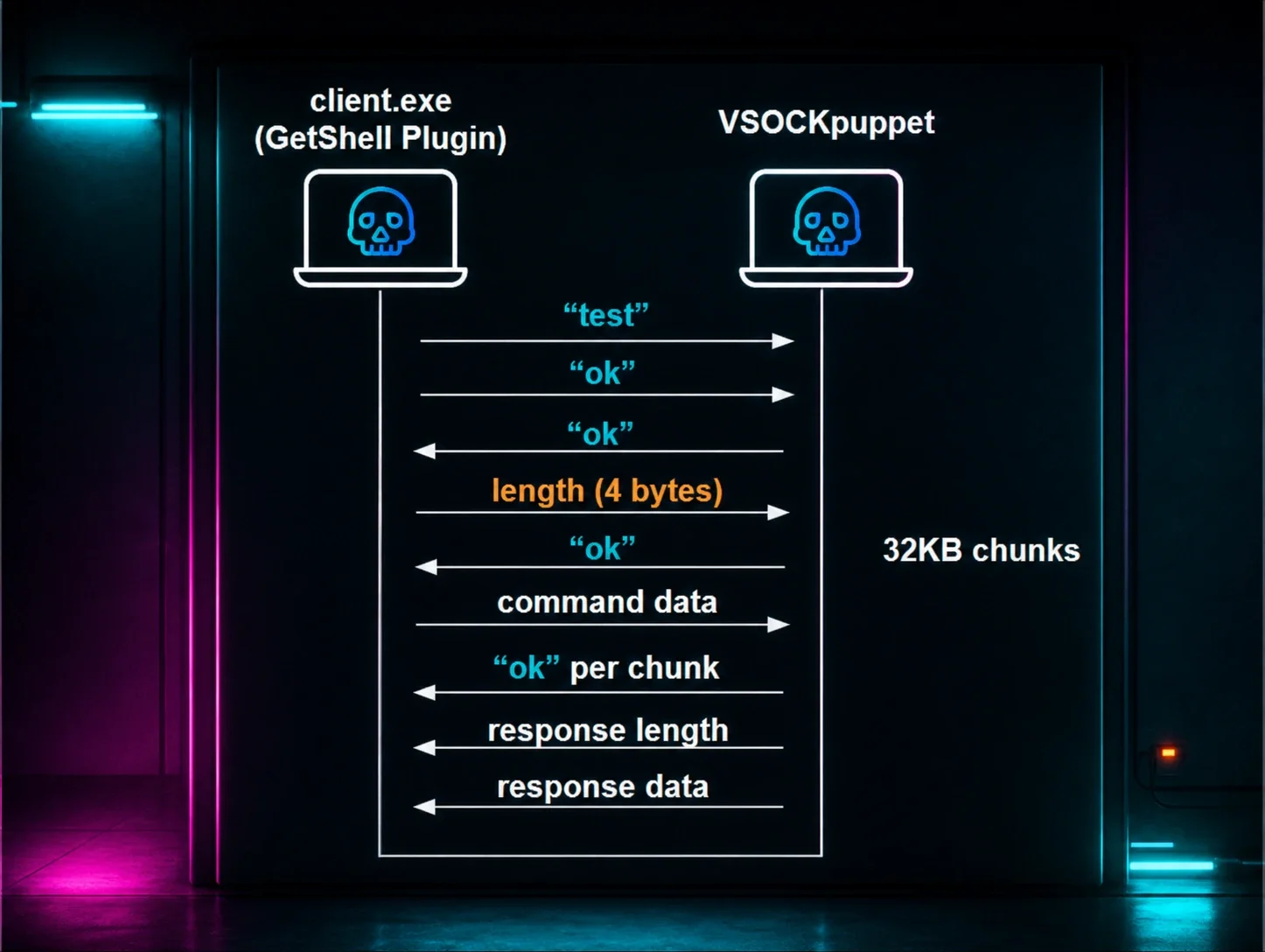
What Happened
Huntress identified a multi‑step attack that leverages suspected zero‑day vulnerabilities in VMware ESXi. The adversary uses VSOCK sockets to stealthily communicate between the guest VM and the hypervisor, enabling a break‑out that can compromise the entire host.
Impact
All organizations running VMware ESXi hosts are at risk. A successful exploit can grant attackers full control over the hypervisor, allowing lateral movement, data exfiltration, and persistence across virtual machines.
What to Do
- Apply the latest ESXi security patches as soon as they are released.
- Disable or restrict VSOCK usage on hosts unless required for legitimate workloads.
- Enable hypervisor‑level logging and audit VSOCK traffic for anomalies.
- Implement host‑based intrusion detection that monitors for unusual syscalls or memory access patterns.
- Segment virtual networks and enforce least‑privilege access to management interfaces.
Mitigation Checklist
- Verify ESXi version and patch level.
- Review and tighten VSOCK permissions in VM configuration files.
- Deploy host‑based monitoring tools that alert on hypervisor escape indicators.
- Conduct regular penetration tests focused on VM escape vectors.
Related articles

Atlassian CVE-2026-21589: Arbitrary File Access Vulnerability Exploited in Production
On Oct 5 Atlassian released patches for CVE‑2026‑21589, a directory‑traversal flaw that lets attackers read files inside the web‑app directory via a ‘::’ escape sequence. Recent honeypot scans show active exploitation attempts. Defenders should patch immediately, verify file‑access controls, and monitor for suspicious download URLs.
Read briefing
Apple Unveils iPadOS 27.0 RC (24A435) – Early Access for Developers
Apple rolled out the iPadOS 27.0 Release Candidate (24A435) on September 9, 2026, giving developers a preview of the next major OS. While the official release notes are still sparse, the RC is expected to bring new APIs, UI refinements, performance tweaks, and critical bug fixes. Developers can download the build via TestFlight, test their apps, and report any issues back to Apple. The release marks another step toward the full 27.0 launch later this year.
Read briefing
ATM Malware Architect Appears in Nebraska Court After Arrest
Anibal Aguirre, the alleged mastermind behind the Ploutus ATM‑jackpotting malware, pleaded not guilty in a Nebraska court after his arrest in Venezuela. The case underscores the scale of ATM theft—over 1,500 attacks and $40.7 million in losses—and highlights the need for tighter ATM security. Defenders should review firmware integrity, physical access controls, and monitoring for malware signatures.
Read briefing
ThreatsDay Bulletin: AI‑Powered Zero‑Day Chain, 543K Live Secrets, Model Inspection RCE
ThreatsDay highlighted an AI‑driven zero‑day exploitation chain, a list of 543,000 exposed secrets, and a remote code execution flaw in model inspection tools. Defenders using ML inference services and secret repositories should audit, patch, and harden their systems immediately.
Read briefing