
Threat Intel
Binance $6.3B Crypto Theft: Lessons for SecOps and Defenders
Binance suffered the largest recorded crypto theft, losing $6.3 billion after a DevOps engineer’s laptop was compromised. The incident highlights credential misuse and the need for rigorous device security. Defenders should audit access controls, enforce MFA, and monitor for anomalous withdrawal patterns.
What happened
On October 30, Binance announced that attackers stole roughly $6.3 billion in cryptocurrency from its exchange. The breach began when a DevOps engineer’s laptop was compromised, allowing the intruder to access a service container and submit unauthorized withdrawal transactions across multiple blockchains. Binance confirmed that no private keys were leaked, indicating the attackers leveraged compromised credentials rather than stolen wallets.
Investigators identified a multi‑stage attack that exploited additional breach points beyond the initial laptop compromise. Blockchain analytics firms TRM Labs and Chainalysis linked the stolen funds to the North Korean group TraderTraitor, which has a history of large‑scale crypto thefts. The attackers moved the assets through a series of mixers and cross‑chain transfers to obfuscate the trail.
Who is affected
Binance users, both retail and institutional, are directly impacted as their balances were reduced by the stolen amounts. The exchange’s liquidity and market confidence were also shaken, affecting traders who rely on Binance for order execution and settlement.
Other cryptocurrency exchanges and custodial services may face heightened scrutiny, as the incident demonstrates that even the largest platforms are vulnerable to credential‑based attacks. The broader crypto ecosystem, including DeFi protocols that integrate Binance liquidity, may experience secondary effects such as increased volatility and regulatory pressure.
Impact
The financial loss of $6.3 billion is the largest single theft in crypto history, underscoring the high value of digital assets and the need for robust security postures. Binance’s emergency fund and company reserves were used to reimburse affected users, but the incident exposed gaps in internal controls and incident response.
Regulators in multiple jurisdictions are now examining Binance’s security practices, and the event may accelerate the development of stricter compliance standards for crypto exchanges. Market participants are also reassessing risk models that previously assumed a lower probability of large‑scale theft.
Exposure
The primary vector was a compromised laptop belonging to a DevOps engineer, which provided the attackers with access to a service container that processes withdrawal requests. The breach did not involve the theft of private keys, suggesting that the attackers exploited privileged credentials and possibly misconfigured access controls.
Additional breach points were identified, indicating that the attackers used a layered approach to bypass defenses. The incident highlights the importance of device hardening, least‑privilege access, and continuous monitoring for anomalous activity on privileged accounts.
What to do
Defenders should immediately audit all privileged accounts, especially those with access to transaction processing systems. Verify that multi‑factor authentication (MFA) is enforced for all users with elevated permissions and that device security policies are in place.
Concrete actions:
- Conduct a full inventory of all devices with privileged access and enforce device compliance checks.
- Implement role‑based access controls (RBAC) to limit the scope of each account’s permissions.
- Enable MFA on all accounts that can initiate withdrawals or modify transaction parameters.
- Deploy continuous monitoring to detect anomalous withdrawal patterns, such as large batch transfers or rapid successive withdrawals.
- Review and harden container and service configurations to restrict lateral movement.
- Establish an incident response playbook that includes immediate account lockout and forensic analysis of compromised devices.
What to watch
Security teams should monitor for phishing campaigns that exploit the Binance incident, as attackers may attempt to harvest credentials through fake support or recovery portals. Keep an eye on blockchain analytics for new clusters linked to TraderTraitor or similar threat actors.
Stay updated on regulatory developments and any new security guidelines issued by crypto industry bodies. Regularly review and update security policies to incorporate lessons learned from the Binance breach, ensuring that credential management and device security remain top priorities.
Related articles

Bitget Exchange Loses $351M in Crypto Heist; Possible North Korean Actor Involved
Bitget detected a $351.6 million theft from hot wallets on Sep 24, with evidence pointing to North Korean threat patterns. The exchange’s cold storage remained safe and the incident has been reported to authorities. Defenders should tighten hot‑wallet controls and monitor for similar anomalies.
Read briefing
Binance $6.3 B Crypto Theft Linked to Compromised DevOps Laptop
Binance disclosed that a compromised DevOps engineer’s laptop enabled attackers to forge withdrawal requests, draining roughly $6.3 billion. The breach involved privilege escalation and lateral movement, not a stolen wallet key. Defenders should enforce MFA, isolate privileged endpoints, and monitor for anomalous API activity.
Read briefing
Operation Blackout: Lessons for SecOps from the Dismantling of West African Scam Networks
Operation Blackout was a coordinated law‑enforcement effort that shut down a network of scam centers in West Africa. The operation demonstrates the power of public‑private collaboration and provides concrete steps for defenders to harden against similar threats. SecOps teams should review their threat‑intel feeds, patch management, and incident‑response playbooks in light of these findings.
Read briefing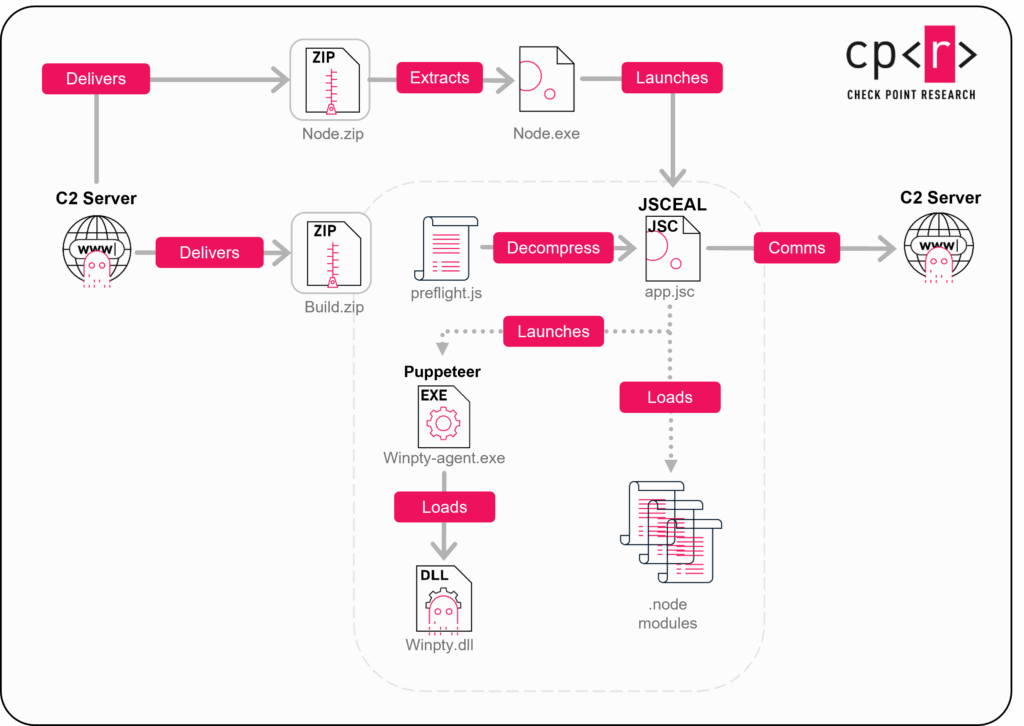
Unpacking JSCeal: Static Deobfuscation of Compiled V8 Bytecode Reveals Crypto‑Stealer Capabilities
JSCeal, a cryptocurrency‑focused stealer, arrives on victims as compiled V8 bytecode (.jsc) bundled with a Node.js runtime. Check Point Research built a fully static deobfuscation pipeline—extending the open‑source View8 decompiler—to recover pseudocode from the obfuscated, version‑specific bytecode. The recovered code exposes keylogging, credential theft, browser hijacking, and a local MITM proxy, while recent variants add extra encryption, target newer Node.js/V8 releases, and expand to macOS. The work was showcased at Black Hat USA 2026 and the deobfuscator tool is now publicly available.
Read briefing