
Vulnerabilities
Refrigeration Controls Compromised: European Supermarkets Forced to Discard Food
Supermarkets across Belgium, Sweden, Estonia and other European countries experienced a coordinated cyberattack that remotely altered refrigeration settings, causing fridges and freezers to warm up. The incident led to significant food waste and highlighted vulnerabilities in remote control systems. Defenders must immediately audit and secure their industrial control environments.
What happened
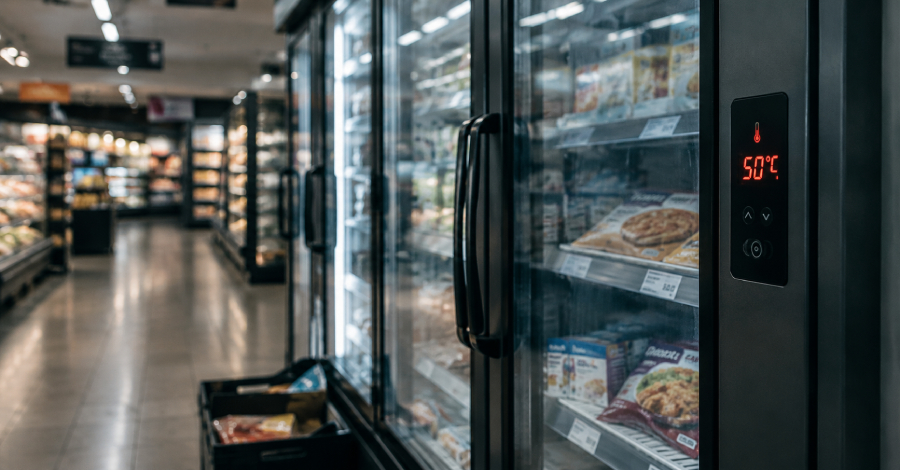
On the night of November 2, attackers remotely accessed refrigeration control units in a handful of supermarkets across Belgium, Sweden, Estonia, and other European nations. The malicious actors changed the temperature settings, switching units into defrost mode or raising set points to 50 °C. As a result, fridges and freezers warmed, forcing store staff to discard chilled and frozen goods to prevent spoilage.
Danfoss, the Danish manufacturer of the affected refrigeration controllers, confirmed that its products were involved. The attack mirrors a similar incident that occurred three weeks earlier in France, where hundreds of supermarkets were hit. Although no official attribution has been released, the pattern suggests a coordinated effort targeting remote‑controlled refrigeration systems.
Who is affected
Supermarkets directly impacted include Delhaize in Belgium, ICA in Sweden, and Selver in Estonia. In Belgium, the refrigeration contractor Sabcobel, which manages Delhaize’s systems, reported the switch to defrost mode. In Sweden, ICA’s store in Sjöbo had its units set to 50 °C, while in Estonia, Selver’s freezer experienced a temperature rise of 2–3 °C before the issue was resolved within ten minutes.
Beyond the named chains, any retailer using Danfoss‑based controllers or relying on remote monitoring services such as Sabcobel or Kitman Coldtech could be vulnerable. The attack underscores the risk for all operators that maintain remote access to critical industrial control devices.
Impact
The immediate consequence was the loss of perishable inventory. Stores were forced to remove food from shelves and, in some cases, discard it entirely to avoid food‑borne risks. The financial impact includes the cost of wasted goods, potential penalties for non‑compliance with food safety regulations, and the operational cost of restoring normal refrigeration cycles.
Operationally, the incident disrupted store workflows, required staff to manage emergency cooling procedures, and introduced safety hazards as equipment operated outside intended parameters. The event also highlighted gaps in incident response readiness for industrial control systems within retail environments.
Exposure
Investigations point to the use of remote access granted to third‑party contractors. Many refrigeration units expose management interfaces over the internet, allowing external parties to monitor and adjust settings. Default or weak credentials, lack of network segmentation, and outdated firmware create a fertile ground for exploitation.
Additional exposure stems from insufficient logging and monitoring of control‑system traffic. Without real‑time alerts for anomalous configuration changes, defenders may not detect malicious activity until physical effects manifest.
What to do
Defenders should immediately isolate affected refrigeration units from the network, verify firmware versions, and apply the latest security patches. Remote access should be disabled unless absolutely necessary, and any remaining remote connections must be protected with strong authentication and encryption.
- Audit all industrial control devices for exposed management interfaces.
- Enforce network segmentation between control‑system networks and corporate or public networks.
- Change default credentials and enforce multi‑factor authentication for remote access.
- Implement continuous monitoring of configuration changes and set up alerts for unauthorized adjustments.
- Maintain an up‑to‑date inventory of all control‑system components and their firmware versions.
- Coordinate with vendors, such as Danfoss, to receive timely security advisories.
- Develop and rehearse an incident‑response plan specific to industrial control systems.
What to watch
Attackers may target other industrial control systems that rely on remote management, including HVAC, water treatment, and energy distribution. New vulnerabilities in refrigeration controller firmware could emerge, so continuous monitoring of vendor advisories is essential.
Stay informed through national cybersecurity agencies, such as CERT‑FR, and industry groups that track supply‑chain threats. Early detection of anomalous traffic to control‑system ports can provide a critical window to mitigate future attacks before they cause physical damage.
Related vulnerabilities

Denmark CPR Registry Breach Exposes 8.8 Million Citizens' Personal Data
In September 2026 a breach of Denmark’s Central Population Register (CPR) exposed names, addresses, CPR numbers and other personal details for 8.8 million individuals. The attack leveraged a private company’s legitimate access and brute‑forced valid CPR identifiers. Defenders should audit access controls, monitor for credential misuse, and enforce MFA on registry interfaces.
Read briefing
European Commission Proposes EU KIDS Act to Enforce Strict Age Limits and Design Mandates for Social Platforms
The European Commission has introduced the EU KIDS Act, a legislative proposal aimed at banning social media accounts for children under 13 and setting a bloc-wide minimum age of 15. The framework mandates strict safety-by-design standards, parental controls, and restrictions on addictive product features for minors across digital platforms.
Read briefing
Cisco ASA/FTD DTLS DoS Vulnerability (CVE‑2026‑20250) – Immediate Patch Required
Cisco’s Adaptive Security Appliance (ASA) and Threat Defense (FTD) software for the 3100 and 4200 series can be forced into a denial‑of‑service state by an unauthenticated attacker sending crafted DTLS traffic. The flaw stems from improper resource handling during DTLS message processing, causing a device reload. Cisco has issued patches and workarounds; applying the update is essential to keep firewalls online.
Read briefing
Pentagon Data Breach: Millions of SSNs and Military Records Exposed
The U.S. Department of Defense suffered a breach that exposed Social Security numbers and sensitive military personnel records for millions of individuals. The incident involved a compromised contractor system and highlights the need for stricter access controls, continuous monitoring, and incident response readiness. Defenders should review privileged access, enforce MFA, and conduct forensic analysis.
Read briefing