
Network Security
Russian Drone Strikes Damage Kyiv Data Centers and Disrupt Regional ISP Connectivity
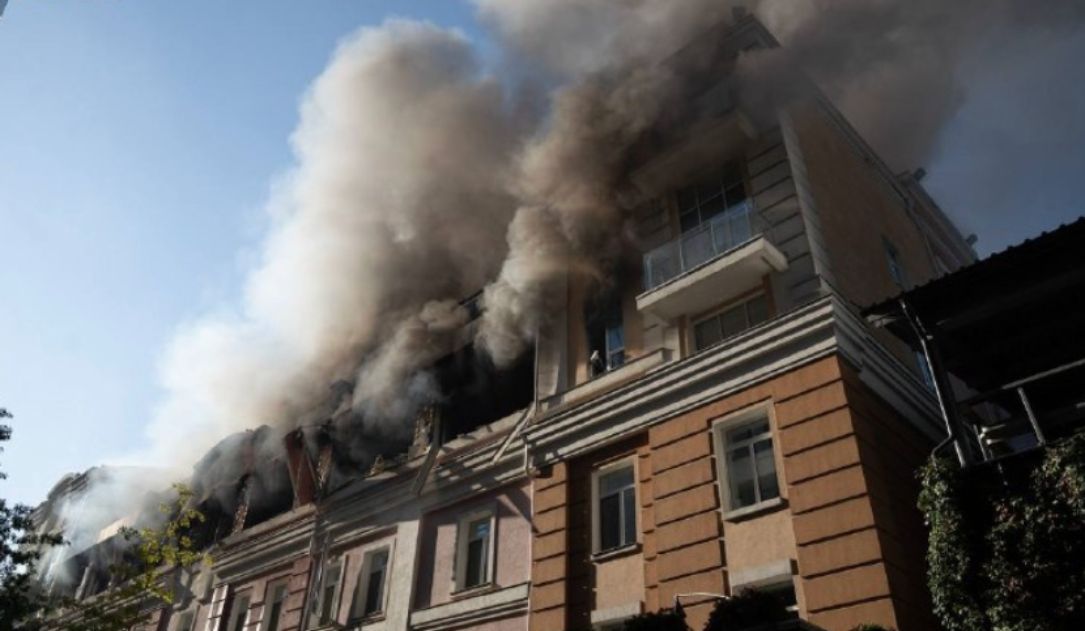
Recent Russian drone and missile strikes targeting Kyiv damaged local data centers and telecommunications infrastructure, causing partial connectivity losses for at least four major Ukrainian internet service providers. The outages impacted approximately 100,000 households and disrupted critical civilian communications systems, prompting emergency repair operations.
What Happened
A series of Russian drone and missile strikes directed at Kyiv damaged multiple data centers and regional telecommunications facilities. According to internet monitoring organization NetBlocks and local officials, at least four internet service providers—Kyiv Link, Pautina, Utels, and Crazy Network—suffered partial connectivity losses affecting roughly 100,000 households in the capital and surrounding regions.
Impact
The physical damage targeted core networking equipment and traffic exchange facilities. Utels reported a power loss and equipment damage at a primary data center, though services were largely recovered within two hours. Pautina sustained more severe impacts across multiple infrastructure sites, knocking nearly half of its network offline. Crazy Network confirmed outages extending into the Vinnytsia and Khmelnytskyi regions following a strike on a central traffic exchange facility.
Ukrainian officials emphasized that these outages severely disrupt the delivery of life-saving civilian alerts, including real-time warnings regarding incoming aerial attacks, while also impairing general operational continuity.
What Defenders Should Do
SecOps and network administrators operating in affected or high-risk regions should review their infrastructure resilience and disaster recovery plans:
- Verify the redundancy of critical routing paths and core transit providers to handle sudden regional traffic shifts.
- Ensure out-of-band management and backup power systems (UPS and generators) at local facilities are fully tested and operational.
- Establish alternative communication channels for emergency alerts and operational coordination when primary broadband links degrade.
- Coordinate closely with local transit and hosting providers to track ongoing infrastructure restoration and assess transit stability.
Related articles

NDR Blind Spot: Why Perimeter‑Focused Monitoring Misses Lateral Attacks
Recent analysis shows that most Network Detection and Response (NDR) solutions concentrate on perimeter traffic, leaving east‑west movement—the primary vector in modern breaches—unmonitored. Defenders must extend visibility into internal flows, integrate threat intelligence, and adopt XDR‑style correlation to detect lateral activity early.
Read briefing
DynoWiper: New Data‑Wiping Malware Targets Polish Energy Company, Likely Sandworm
ESET researchers uncovered a data‑wiping incident at a Polish energy company, deploying DynoWiper that erased critical files. The attack mirrors the ZOV wiper and is attributed to the Russian‑aligned Sandworm group. Defenders should back up, isolate, and monitor for similar deletion patterns.
Read briefing
Russian State‑Supported Threat Targets Zimbra Collaboration Suite – CISA, NSA, FBI Alert
Security agencies CISA, NSA and FBI have jointly warned that Russian state‑supported actors are actively targeting Zimbra Collaboration Suite. The threat uses a mix of known CVEs, malicious attachments and drive‑by downloads to compromise Zimbra servers, exfiltrate data and pivot into corporate networks. Organizations running Zimbra must patch, harden and monitor for signs of compromise.
Read briefing
Ransomware Costs Reveal: Ransom Is Just the Tip of the Iceberg – Downtime, Recovery and Compliance Add Millions
While the headline ransom payment often steals the spotlight, the real financial damage from a ransomware hit runs into the millions. New data shows an average total cost of $5.08 million per incident, compared to a median ransom of roughly $140 k. Prolonged downtime, complex recovery, and regulatory fallout drive the bulk of the bill. Only 35 % of firms actually restore critical systems in under a day, despite 60 % claiming they can. A mature Business Continuity & Disaster Recovery (BCDR) plan can slash downtime, streamline backups and ease compliance, dramatically reducing the overall hit.
Read briefing