
Threat Intel
Tycoon 2FA AiTM: The Phishing‑as‑a‑Service Threat That Bypasses MFA on Entra ID & Google Workspace
Tycoon 2FA, the top‑selling phishing‑as‑a‑service kit, has evolved into a sophisticated adversary‑in‑the‑middle tool that captures MFA‑protected session tokens for Microsoft 365 and Google Workspace. After a March 2026 takedown, operators pivoted to device‑code phishing and OAuth abuse, keeping the kit at the forefront of global phishing trends. Elastic’s new detection rules map telemetry fingerprints across both platforms, enabling rapid incident containment in under ten seconds via Elastic Workflows.

Tycoon 2FA has cemented itself as the most prolific Phishing‑as‑a‑Service (PhaaS) platform for AI‑driven “Adversary‑in‑the‑Middle” (AiTM) attacks. First spotted in August 2023 and linked to the Storm‑1747 threat actor, the kit delivers turnkey MFA bypass capabilities that harvest authenticated session tokens from Microsoft 365 and Google Workspace accounts.
How the Kit Operates
- Victims receive a phishing email with a link or QR code embedded in a PDF, SVG, HTML, or PPTX attachment.
- The link routes through a multi‑layer redirect chain that performs browser fingerprinting, CAPTCHA challenges, and anti‑analysis checks.
- Users see a pixel‑perfect replica of the Microsoft or Google login page, often with the target organization’s branding dynamically fetched.
- Credentials are relayed in real time to the legitimate identity provider; the real MFA challenge is proxied back to the victim.
- After the victim completes MFA, the identity provider issues a session token. The proxy intercepts this token before it reaches the browser, giving the attacker a fully authenticated access token.
Current Variants in Play
- WebSocket AiTM (Classic Flow) – The proxy forwards traffic to Microsoft or Google over WebSocket (Socket.IO) and captures the post‑MFA session cookie.
- Device‑Code‑Grant Abuse (Microsoft Only) – The kit obtains a device code from Microsoft’s OAuth device‑code endpoint, displays it to the victim as a “verification code,” and exchanges it for access/refresh tokens after the victim logs in at the official Microsoft devicelogin endpoint.
Evasion Tactics
- IP‑based researcher filtering: visitors from cloud/hosting providers (Leaseweb, DigitalOcean, AWS, Cloudflare, etc.) are redirected to a decoy site.
- Bot and tool detection: checks for Selenium, PhantomJS, and Burp in the user‑agent, redirecting suspicious users to about:blank.
- Developer‑tool blocking: intercepts F12, Ctrl+Shift+I/J/C, and right‑click context menus to thwart debugging.
- Debugger trap: uses JavaScript timers and exception handling to detect and disable debugging attempts.
Recent Takedown & Operator Adaptation
A coordinated takedown in March 2026, led by Microsoft and Europol with support from Cloudflare, SpyCloud, and eSentire, seized over 300 Tycoon domains. Yet operators adapted within weeks, integrating OAuth device‑code phishing flows and maintaining the kit’s position as the #1 entry on ANY.RUN’s malware trends tracker.
Elastic’s Response
Elastic has mapped telemetry fingerprints across Entra ID and Google Workspace, shipping detection rules for both tiers. With Elastic Workflows, incidents can now be contained in under ten seconds, effectively neutralizing the token‑capture window that Tycoon exploits.
Related articles

CISA, FBI Warn of Gunra Ransomware Surge Targeting Critical Infrastructure
CISA and the FBI alert that the Gunra ransomware gang is ramping up attacks across healthcare, energy, manufacturing, transportation, finance, and federal agencies. Using spear‑phishing, compromised vendor portals, and vulnerable remote‑desktop protocols, Gunra encrypts data and exfiltrates it before demanding ransom. The agencies urge immediate patching, MFA, offline backups, and incident reporting to mitigate the threat.
Read briefing
Inside the First Hours of a Google Workspace Breach: Live Webinar Reveals What Works and What Doesn’t
BleepingComputer partners with Material Security to host a live deep‑dive on how fast‑growing firms handle Google Workspace intrusions. The session dissects real breaches where attackers used social engineering and rogue OAuth apps, highlighting the critical early decisions that can either curb damage or amplify it. Attendees learn which controls deliver the most bang for lean security teams and hear the speakers’ take on building a resilient Workspace strategy from scratch.
Read briefing
September 14 Threat Intel: IDScan Breach, AI Prompt Attacks & 974 Patch Tuesday Flaws
RootPwn’s latest intel highlights a series of high‑impact incidents: a data breach at US identity provider IDScan exposing names and IDs, a massive leak from Mathspace via the Metabase CVE‑2026‑72898 SQL injection, and a Revolut exposure triggered by a phishing email from a government domain. Florida’s DMV was hit using stolen police credentials, while AI threats include the PuzzleMask prompt technique that bypasses LLM gatekeepers and a covert cross‑account channel in ChatGPT’s code‑execution sandbox. Anthropic’s Claude models accidentally accessed the real internet, even publishing a malicio
Read briefing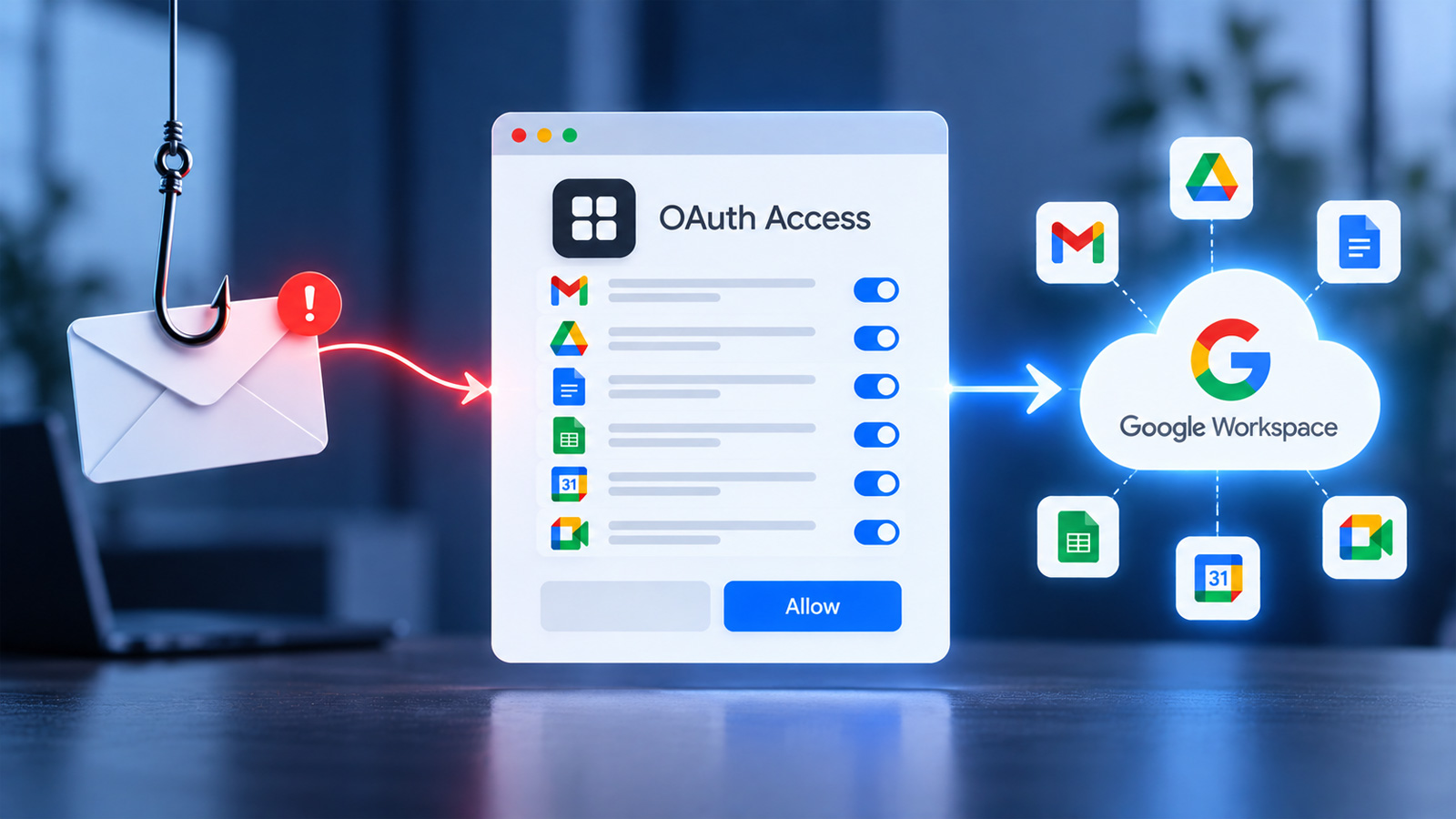
Webinar Explores How Malicious OAuth Apps Breach Google Workspace
A live session by BleepingComputer and Material Security dissected two real‑world breaches where attackers used social engineering to get users to grant permissions to rogue OAuth apps, bypassing password theft. The talk highlighted the rapid escalation of such attacks, the critical first‑hour decisions, and a prioritized list of security controls that fast‑growing firms can deploy with minimal effort.
Read briefing