
Threat Intel
Webinar Explores How Malicious OAuth Apps Breach Google Workspace
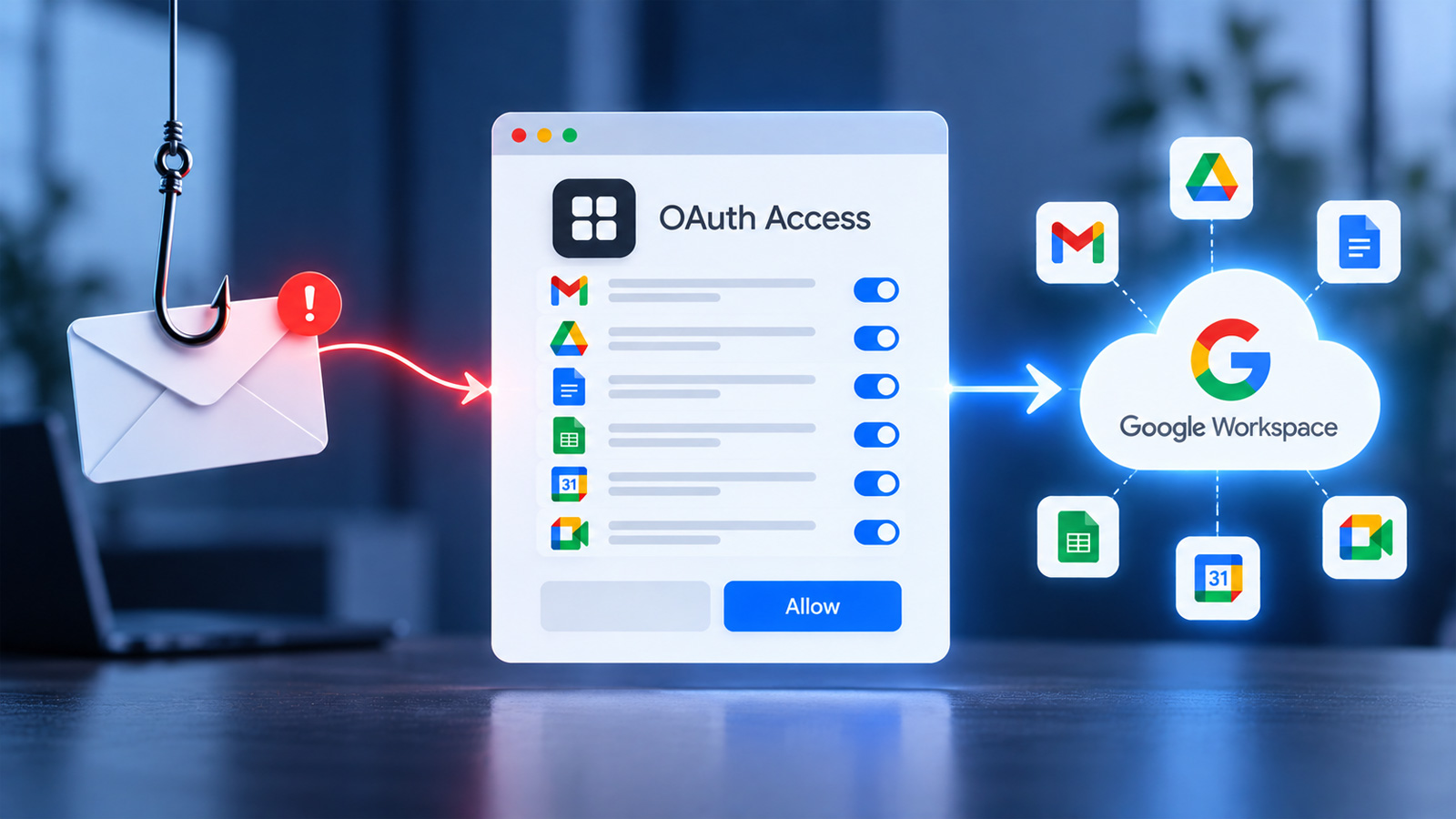
A live session by BleepingComputer and Material Security dissected two real‑world breaches where attackers used social engineering to get users to grant permissions to rogue OAuth apps, bypassing password theft. The talk highlighted the rapid escalation of such attacks, the critical first‑hour decisions, and a prioritized list of security controls that fast‑growing firms can deploy with minimal effort.
What the Webinar Covered
On September 23, 2026, BleepingComputer hosted a live webinar titled Breach Autopsy: How Fast‑Growing Companies Are Breached Through Google Workspace. The session featured Rajan Kapoor, VP of Security at Material Security, and Rick Fitzgerald, President of Fireside Consulting LLC. They unpacked two recent attacks that leveraged malicious OAuth applications in tandem with social‑engineering tactics to infiltrate Google Workspace environments.
Unlike classic credential‑stealing campaigns, these breaches didn’t rely on stolen passwords or software exploits. Instead, attackers tricked users into authorizing a seemingly legitimate app, which then obtained the permissions the victim granted—often enough to read, delete, or exfiltrate sensitive data.
Key Takeaways
- OAuth’s convenience can become a double‑edged sword: users can unknowingly hand over powerful access to malicious third‑party apps.
- Visibility into which apps are authorized and the scope of their permissions is essential for any Google Workspace security program.
- Early‑stage response decisions—such as revoking suspicious app access and conducting a rapid threat hunt—are decisive in limiting damage.
- Fast‑growing companies with limited security budgets can implement high‑impact controls quickly, such as mandatory app vetting, least‑privilege scopes, and automated alerts for new OAuth authorizations.
Practical Defenses to Deploy Now
- Enable OAuth App Whitelisting to restrict which applications can request access.
- Implement Least‑Privilege Scopes so users grant only the minimal permissions needed.
- Set up Real‑Time Monitoring for new or changed app authorizations.
- Conduct regular Security Awareness Training focused on phishing and OAuth consent scams.
- Use Conditional Access Policies to block or flag suspicious consent requests.
“These attacks show that protecting Google Workspace means looking beyond passwords and traditional MFA,” said Kapoor. “Visibility into third‑party app access is the first line of defense.”
Related articles

Inside the First Hours of a Google Workspace Breach: Live Webinar Reveals What Works and What Doesn’t
BleepingComputer partners with Material Security to host a live deep‑dive on how fast‑growing firms handle Google Workspace intrusions. The session dissects real breaches where attackers used social engineering and rogue OAuth apps, highlighting the critical early decisions that can either curb damage or amplify it. Attendees learn which controls deliver the most bang for lean security teams and hear the speakers’ take on building a resilient Workspace strategy from scratch.
Read briefing
Tycoon 2FA AiTM: The Phishing‑as‑a‑Service Threat That Bypasses MFA on Entra ID & Google Workspace
Tycoon 2FA, the top‑selling phishing‑as‑a‑service kit, has evolved into a sophisticated adversary‑in‑the‑middle tool that captures MFA‑protected session tokens for Microsoft 365 and Google Workspace. After a March 2026 takedown, operators pivoted to device‑code phishing and OAuth abuse, keeping the kit at the forefront of global phishing trends. Elastic’s new detection rules map telemetry fingerprints across both platforms, enabling rapid incident containment in under ten seconds via Elastic Workflows.
Read briefing
AI Platforms Become New Attack Vectors: Hackers Hijack Claude, ChatGPT and More
As AI tools like Claude, ChatGPT and Grok become integral to daily workflows, threat actors are turning these trusted platforms into launchpads for malware, phishing, and data theft. By weaponizing shareable AI artifacts, exploiting sponsored search results and embedding malicious instructions in seemingly legitimate AI conversations, attackers can deliver ransomware, credential stealers and other payloads with minimal user suspicion. Recent campaigns—FakeAgent’s Claude Artifact redirect to SectopRAT and a fake Apple‑support guide on claude.ai/share that installs the MacSync stealer—show how q
Read briefing
AI‑Powered Attack Slashes Two‑Week Breach to 10 Hours
In a recent incident, a human attacker leveraged frontier AI agents to infiltrate an enterprise network in under ten hours—drastically cutting the typical two‑week timeline. The coordinated bot‑team harvested credentials, seized root, hijacked CI/CD pipelines, and even weaponized the victim’s own AI tools. The breach left an 80‑page audit of the target’s defenses, underscoring how AI‑driven orchestration can turn a single operator into a rapid, multi‑specialist red team.
Read briefing