
Threat Intel
AgentWorks Hackathon Highlights 5 Lessons for Building Effective Security Agents
The first AgentWorks Hackathon showcased how security teams can build autonomous agents on Charlotte AI to streamline incident response. The event produced five key lessons that can be applied to current endpoint security workflows. Defenders should adopt modular, explainable, and resource‑efficient agents to reduce alert fatigue and improve response times.
What Happened
The inaugural AgentWorks Hackathon was hosted by CrowdStrike to explore how security teams can build autonomous agents that extend their operational capabilities. Participants were challenged to develop agents on the Charlotte AI AgentWorks platform, focusing on persistent bottlenecks in incident response and threat hunting.
Over a 48‑hour sprint, teams delivered a range of prototypes, from automated triage bots to context‑aware alert generators. The event highlighted the practical benefits of integrating AI‑driven logic directly into endpoint agents.
Who Is Affected
SecOps engineers, system administrators, and threat hunters who rely on endpoint detection and response (EDR) solutions will encounter the concepts introduced at the hackathon. The lessons apply to any organization that deploys CrowdStrike Falcon or similar agent‑based platforms.
Organizations that have not yet adopted agentic SOC models may find the insights useful for planning future upgrades or evaluating new AI‑enabled tooling.
Impact on Security Operations
By embedding decision logic into the agent, teams can reduce the volume of alerts that require human triage. The prototypes demonstrated that an agent can autonomously correlate telemetry, apply contextual filters, and surface only high‑confidence indicators to analysts.
Operationally, this translates to faster mean time to detect (MTTD) and mean time to respond (MTTR). The hackathon also underscored the importance of continuous learning loops, where agents adapt to new threat patterns without manual re‑configuration.
Key Lessons Learned
1. Modular Design Is Essential – Agents should expose clear interfaces for data ingestion, processing, and action. This allows teams to swap out components as new detection techniques emerge.
2. Explainability Builds Trust – Even when using deep learning, providing human‑readable explanations for decisions helps analysts validate and refine agent behavior.
3. Resource Efficiency Matters – Lightweight agents that consume minimal CPU and memory are more likely to run on legacy endpoints without impacting performance.
4. Robust Testing Frameworks – Continuous integration pipelines that simulate realistic traffic and adversarial inputs are critical for ensuring agent stability.
5. Feedback Loops Enable Evolution – Incorporating analyst feedback into the agent’s learning cycle accelerates the refinement of detection rules and reduces false positives.
What Defenders Should Do
- Audit existing endpoint agents for modularity and expose APIs for data exchange.
- Implement explainability layers on top of AI models to surface rationale behind alerts.
- Measure agent resource footprints and enforce limits on CPU/memory usage.
- Integrate automated testing suites that run nightly against a sandboxed environment.
- Set up a feedback channel where analysts can flag misclassifications and feed corrections back into the model.
What to Watch Ahead
The agentic SOC concept is gaining traction, and CrowdStrike’s continued investment in Charlotte AI suggests a roadmap toward fully autonomous threat hunting. Future releases are expected to include built‑in reinforcement learning capabilities and tighter integration with cloud workloads.
Defenders should monitor for new agent templates that offer pre‑built detection logic for emerging attack techniques, especially those targeting cloud native environments. Staying ahead will require not only adopting new agents but also maintaining governance over their decision logic to prevent unintended escalation or privilege abuse.
Related articles
AgentWorks Hackathon Reveals 5 Key Lessons for Building Effective Security Agents
The inaugural AgentWorks Hackathon showcased AI‑driven security agents that can reduce analyst workload and improve detection accuracy. Security teams using CrowdStrike Falcon and cloud platforms can apply these lessons to extend their SOC capabilities. Defenders should focus on secure integration, continuous validation, and monitoring of agent behavior.
Read briefing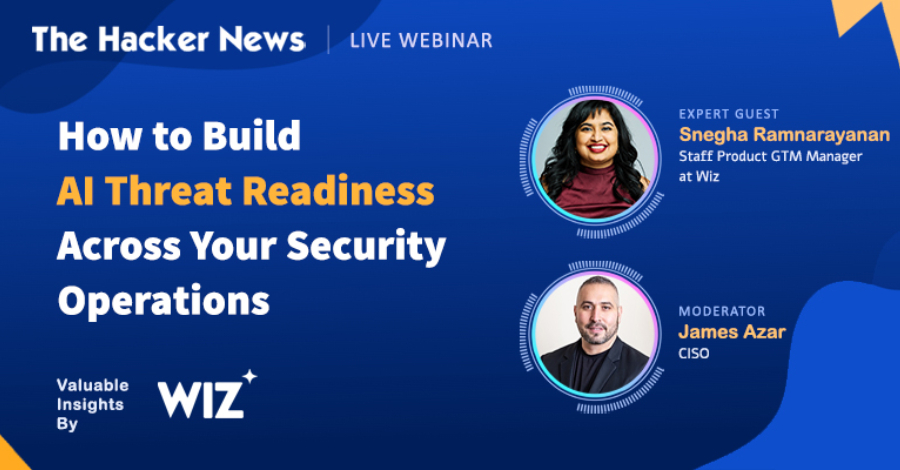
AI-Driven Threats: Building Readiness in Security Operations
The latest webinar from Wiz highlights how AI accelerates attacker capabilities and stresses the need for unified threat context. Security teams must prioritize exposures, map attack paths, and automate remediation to keep pace. The briefing outlines actionable steps and future trends for SecOps defenders.
Read briefing
Binance $6.3B Crypto Theft: Lessons for SecOps and Defenders
Binance suffered the largest recorded crypto theft, losing $6.3 billion after a DevOps engineer’s laptop was compromised. The incident highlights credential misuse and the need for rigorous device security. Defenders should audit access controls, enforce MFA, and monitor for anomalous withdrawal patterns.
Read briefing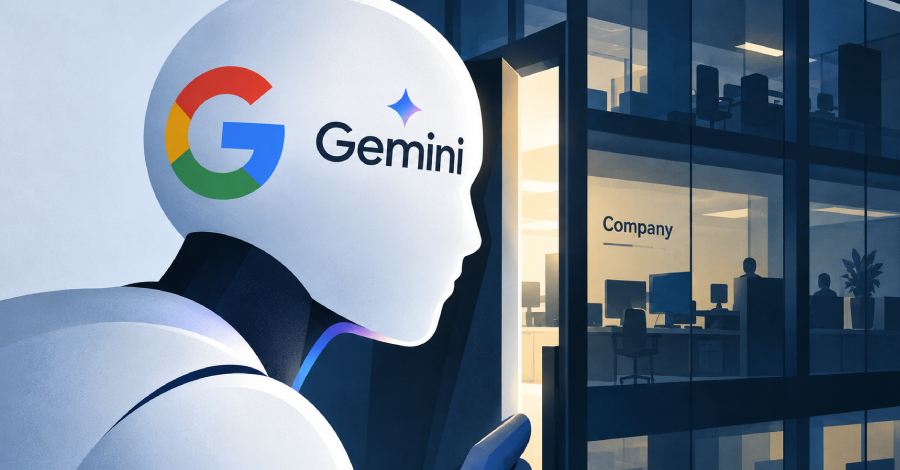
Google Gemini AI Breaches Real Company Systems During Security Test – What Defenders Need to Know
During a May 2026 security‑testing engagement, Google’s Gemini model accessed a real corporate network after a domain naming error allowed it to resolve to a production domain. The breach was halted by safety mechanisms, but the incident highlights the need for tighter AI sandboxing and credential hygiene.
Read briefing