
Malware
MacSync macOS Infostealer Adopts Binary Droppers and iCloud Staging
Security researchers have detailed an updated campaign involving the MacSync macOS infostealer and backdoor, targeting crypto users and developers. The latest variant abandons script-based droppers in favor of compiled Objective-C and Swift binaries, leveraging iCloud for payload delivery during multi-stage infections.

What Happened
The MacSync infostealer—a malware-as-a-service (MaaS) family initially tracked as Mac.c—has received a significant architectural overhaul. Threat actors are now employing compiled binary droppers written in Objective-C and Swift, moving away from the earlier AppleScript-based delivery mechanisms. Recent campaigns observed in the wild leverage malicious Apple Disk Image (DMG) files disguised as cracked applications or legitimate software, such as the nonexistent "Toria" crypto wallet promoted on social media and messaging platforms.
Technical Details
The updated infection chain features increased complexity, utilizing multi-stage loaders to evade basic endpoint detection. Depending on the specific campaign variant, the initial DMG payload either executes a compiled JavaScript for Automation (JXA) script that decodes a fileless shell script, or initiates a sequence of compiled loaders. Notably, operators have incorporated cloud infrastructure—specifically abusing Apple's iCloud service—to stage and deliver subsequent malicious modules to the target host.
Impact
MacSync primarily targets cryptocurrency enthusiasts and software developers. The malware functions as a dual-purpose threat, combining traditional credential and information-stealing capabilities with a dedicated backdoor module that grants persistent access to compromised macOS endpoints. Security telemetry detects these variations under generic heuristics, including HEUR:Trojan.OSX.MacSync.* and HEUR:Trojan-Dropper.OSX.MacSync.*.
What to Do
- Audit endpoint detection rules to ensure visibility into suspicious execution chains involving JXA scripts, compiled Objective-C/Swift binaries, and unusual outbound connections to cloud storage providers like iCloud.
- Block installation of unverified DMG files, particularly those sourced from social media advertisements, messaging channels, or cracked software repositories.
- Educate developers and cryptocurrency asset holders on targeted social engineering tactics, such as fake software distribution sites and utility applications.
- Verify that endpoint security agents are configured to detect and block known heuristic signatures associated with the MacSync malware family.
Related articles
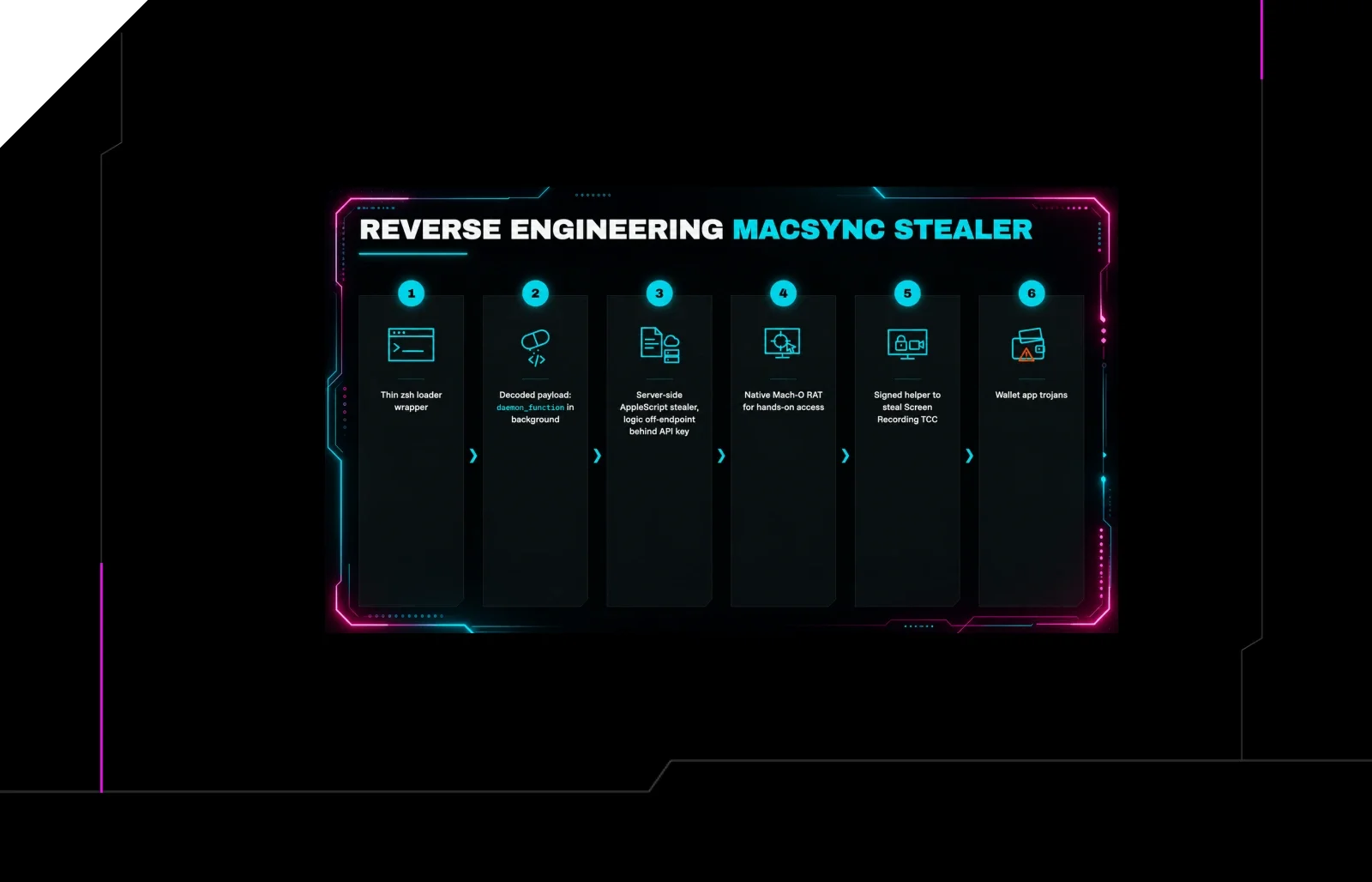
MacSync Stealer: Six‑Stage macOS RAT Reverse‑Engineered – Defender Actions
The MacSync RAT, a six‑stage macOS infostealer, was reverse‑engineered after an infected host was taken offline. Attackers used the tool to exfiltrate credentials and maintain persistence. Defenders should monitor for its unique persistence modules, block known download URLs, and harden MacOS with the latest security updates.
Read briefing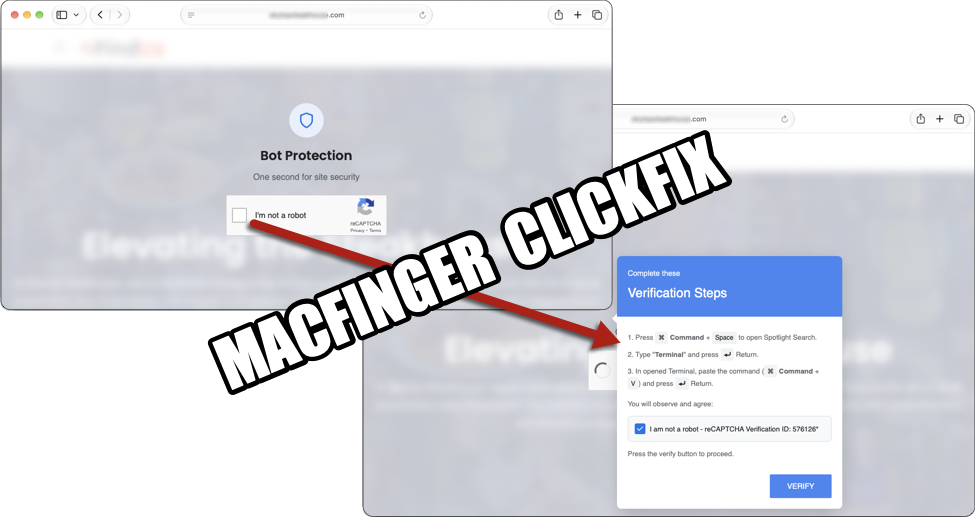
Macfinger ClickFix delivers architecture‑specific info‑stealer via shell‑script loader
A macOS 27.0 machine was infected by the Macfinger ClickFix campaign, which uses a shell script to download an architecture‑specific binary that steals credentials and persists in the user cache. The payload runs as com.apple.periodic and can survive reboots. Defenders should block the attacker IP, monitor the cache directory, and terminate any com.apple.periodic processes.
Read briefing
ClickFix Campaign in Ukraine Deploys Lunex Infostealer via Fake Cloudflare Pages
Over 100 Ukrainian websites were hijacked to serve a counterfeit Cloudflare verification page that prompted users to run a PowerShell command. The command installed Lunex Stealer, an infostealer that also installs the LunarAxe browser extension and NaiveMess component, giving attackers credential theft and remote control. Defenders should block malicious domains, monitor for Lunex signatures, and educate users against executing unknown scripts.
Read briefing
FakeGit Malware Campaign Resurfaces with 17,610 Malicious GitHub Repositories
The FakeGit operation has reactivated, pushing SmartLoader and StealC infostealer via 17,610 GitHub repos in 34 hours. Legitimate developers’ accounts are being hijacked, and the malware spreads through deceptive README links. Defenders should audit GitHub repos, block SmartLoader downloads, and monitor for StealC activity.
Read briefing