
Cybersecurity
Qualys Demonstrates Enterprise-Scale Autonomous Remediation in 2026
Qualys has shown that autonomous, AI‑driven remediation can operate at enterprise scale, reducing the time from vulnerability discovery to patching to under 90 seconds. The approach relies on AI‑speed detection, hyper‑prioritization, and a patch reliability score to ensure rapid, reliable fixes. SecOps teams should evaluate integrating these capabilities to meet tight remediation windows such as CISA’s three‑day mandate.
What Happened
During Black Hat USA 2026, Qualys CEO Sumedh Thakar highlighted a fully automated remediation pipeline that moves from detection to patching in less than 90 seconds. The system combines AI‑speed detection, hyper‑prioritization, and an AI‑driven patch reliability score.
Impact
Traditional workflows leave only ~5 % of findings patched before new vulnerabilities surface. By testing exploitability against live controls, the new method raises that figure to roughly 20 % of the most critical findings. Qualys has already deployed over 500 million patches using this model.
What to Do
- Assess whether your environment can support an AI‑driven detection layer that reduces discovery latency to <90 s.
- Implement hyper‑prioritization to filter findings by real‑world exploitability rather than theoretical scores.
- Adopt a patch reliability score to ensure patches are dependable and reboot‑free before deployment.
- Align remediation cadence with regulatory windows, such as CISA’s 3‑day mandate and zero‑day 24‑hour response targets.
Key Takeaways
Speed is now the decisive factor in vulnerability management. Autonomous remediation eliminates the bottleneck of human triage, enabling organizations to meet aggressive compliance deadlines and reduce the window of exposure for high‑impact threats.
Related vulnerabilities
Qualys TruRisk Autonomous Remediation Cuts CISA KEV Fix Time to 14 Days
Qualys has added an autonomous remediation engine to its Enterprise TruRisk platform, slashing the average time to patch CISA‑KEV vulnerabilities from 1 month 19 days to 14 days. The system prioritizes exposures, validates fixes, and deploys them in controlled waves, eliminating over 90 % of remediation noise.
Read briefing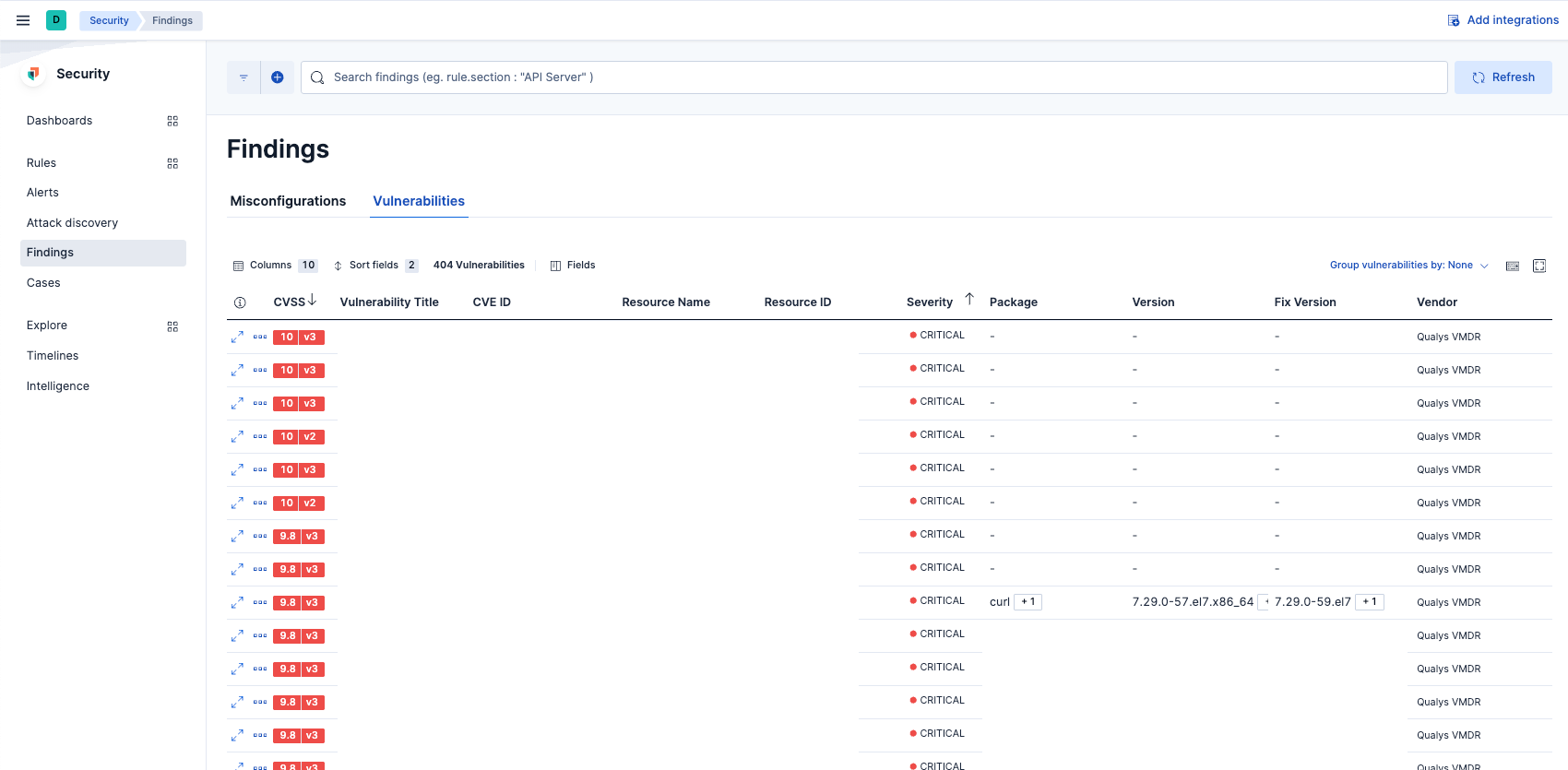
Using Survival Analysis to Measure Patch Velocity in Qualys VMDR with Elastic Stack
Survival analysis offers a more accurate view of vulnerability remediation than MTTR by accounting for censored data. By applying it to Qualys VMDR data in Elastic, defenders can quantify patching probability over time, benchmark teams, and pinpoint bottlenecks. This briefing explains the approach and actionable steps.
Read briefing
Kontext Security Launches with $4M to Provide Runtime Security Controls for AI Agents
Munich-based startup Kontext Security has emerged from stealth with $4 million in funding to deliver a runtime enforcement platform designed for AI agents. The tool sits between agents and enterprise systems to evaluate actions in real time, helping SecOps teams monitor behavior and enforce security policies.
Read briefing
NCSC Active Cyber Defence Year 5: Scaling Automated Protections Against Commodity Attacks
The NCSC's fifth annual Active Cyber Defence (ACD) report highlights the program's role in mitigating commodity cyber threats through automated services. Key focus areas include large-scale malicious site takedowns, protective DNS for public sector entities, and vulnerability scanning for internet-facing infrastructure.
Read briefing