
Advisories
Capcom Data Breach Exposes 11.8M Email Addresses; 196 Passwords Reset
Japanese gaming giant Capcom disclosed a breach that compromised 11,774,247 email addresses and altered passwords for 196 accounts. No passwords were stolen, but 43 users had additional personal data exposed. Defenders should audit login patterns, enforce MFA, and monitor for credential reuse.

What Happened
On October 19, 2026, Capcom identified unauthorized access to its CAPCOM ID service, a shared authentication platform used across its online gaming ecosystem. The intrusion was detected during routine security monitoring and immediately triggered an internal incident response plan.
Investigations revealed that attackers extracted 11,774,247 email addresses along with associated account metadata such as creation dates, last login timestamps, and IP addresses. In a subset of 43 accounts, the breach also included dates of birth, gender, country/region, and nicknames. Additionally, the attackers changed the passwords for 196 affected users.
Who Is Affected
All users who registered with CAPCOM ID during the period leading up to the breach are potentially impacted. The majority of compromised data consists of email addresses, which can be leveraged for phishing campaigns.
While the password compromise was limited to 196 accounts, the presence of additional personal identifiers in 43 accounts raises concerns about targeted social engineering attacks against those individuals.
Impact
For the broader user base, the primary risk is credential stuffing and phishing, given the volume of email addresses exposed. Attackers can combine these addresses with other leaked datasets to craft convincing spear‑phishing emails.
For the 196 users whose passwords were altered, the immediate effect was forced password resets. Capcom’s response included resetting all affected passwords and notifying users via email, ensuring that no user credentials were directly compromised.
Exposure
The data set includes sensitive personal information that, if misused, could facilitate identity theft or fraud. The presence of demographic details in a small subset of accounts increases the value of the breach for malicious actors seeking to tailor attacks.
Because CAPCOM ID is a shared service, the breach potentially exposed login credentials for multiple online services, including game downloads, community forums, and in‑game purchases.
What to Do
Defenders should review their own authentication services for similar exposure risks. Key actions include:
- Audit login logs for anomalous access patterns, especially from unfamiliar IP ranges.
- Enforce multi‑factor authentication (MFA) for all user accounts, prioritizing those with high‑value services.
- Implement credential monitoring to detect if your organization’s usernames or emails appear in public breach databases.
- Educate users on phishing indicators and encourage the use of password managers.
For organizations that rely on third‑party authentication providers, verify that the provider has robust incident response and data protection measures. Consider conducting a penetration test focused on authentication endpoints.
What to Watch
Keep an eye on emerging phishing campaigns that target gaming communities, as attackers may use the leaked email list to craft tailored messages. Monitor for any reports of credential stuffing against your services.
Watch for updates from Capcom regarding any additional data disclosures or remediation steps. Stay informed about industry best practices for protecting shared authentication services.
Related articles

Arizona Court System Breach Exposes Foster‑Care Records and Protective‑Order Backups
A phishing attack compromised Arizona court backups, exposing more than 150,000 foster‑care recommendation reports and protective‑order files. The breach raises serious privacy and safety risks for affected families. Defenders should audit backup security, enforce email‑filtering, and monitor for leaked data.
Read briefing
Sony ISP Subsidiary Data Breach Exposes 2.5 Million Customer Records
Sony Network Communications confirmed that 2,585,481 customer records were compromised in an October 2026 breach. The exposed data includes personal identifiers but no payment information. Defenders should enforce password resets, enable MFA, and monitor for credential‑stuffing attacks.
Read briefing
Revolut Breach: Government‑Agency Impersonation Exposes Passports and Financial Data
Fintech giant Revolut has confirmed a data breach that saw customer information—including full names, dates of birth, contact details, passports, and transaction histories—sent to a threat actor posing as a government agency. The incident, affecting a limited but undisclosed number of users, highlights the risks of domain spoofing and the need for stricter verification protocols. Revolut has blocked the malicious address, notified regulators, and assured that customer funds remain secure.
Read briefing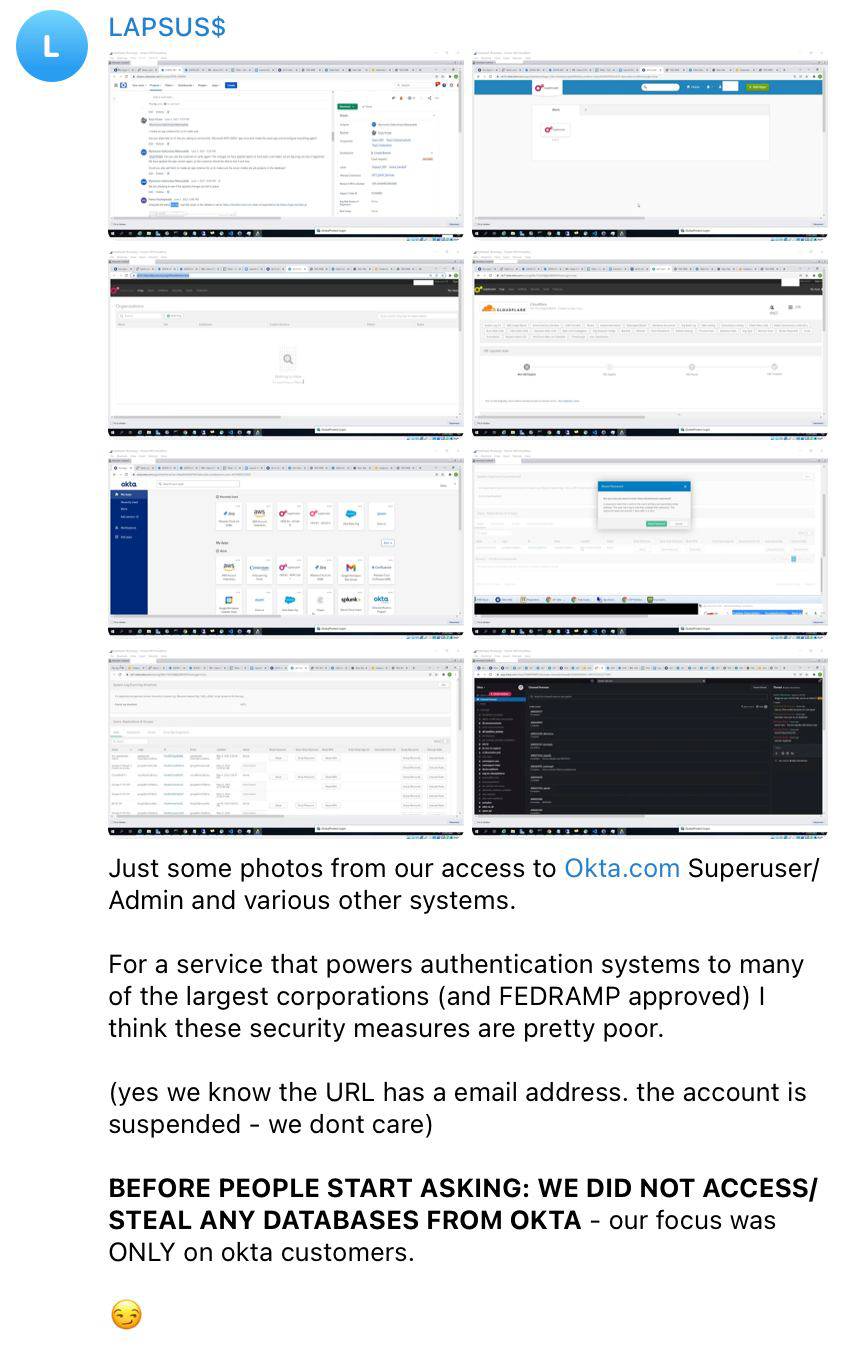
Okta Breach by LAPSUS$ – Limited Access to End‑User Systems, Password Reset Capability
LAPSUS$ disclosed a January 2022 compromise of Okta that granted attackers access to a single end‑user workstation. The breach enabled password and MFA token resets but did not allow user creation, deletion, or data exfiltration. Defenders should audit reset logs, enforce MFA, and verify account integrity.
Read briefing