
Threat Intel
Elastic Global Threat Report Reveals Trends and Guidance for SecOps
Elastic Security’s first Global Threat Report outlines the latest threat landscape, highlights emerging attack techniques, and offers actionable guidance for defenders. The report is built from anonymized telemetry and open detection artifacts, providing a transparent view of how Elastic’s security features perform in the field. SecOps teams can use the findings to fine‑tune detection rules, prioritize mitigations, and stay ahead of ransomware and in‑memory threats.

What Happened
Elastic Security released its inaugural Global Threat Report, summarizing trends observed across millions of telemetry events and offering predictions for the coming months.
Impact
The report covers ransomware, in‑memory attacks, and other malicious behaviors that Elastic’s detection rules target. It shows how the company’s open detection artifacts are actively used by thousands of deployments worldwide.
What to Do
- Enable anonymous telemetry in Elastic Security to feed the community‑driven detection engine.
- Review the latest detection rules published in the protection‑artifacts and detection‑rules repositories.
- Use Elastic Security Labs to run the shared threat‑simulation scripts against your environment.
- Prioritize hardening against ransomware and in‑memory techniques highlighted in the report.
Behind the Scenes
Elastic’s threat researchers analyze daily telemetry, refine rules, and eliminate false positives, ensuring that the protections in Elastic Security evolve with the threat landscape.
Related articles
Elastic Security Labs Unveils Monthly Threat Insight Series – Guidance for SecOps
Elastic Security Labs has launched a monthly multipart series that expands on the Global Threat Report, covering topics such as defense evasion and credential access. The series offers actionable insights for SecOps teams to refine detection and response. Defenders should subscribe, review the latest editions, and integrate findings into their Elastic Security stack.
Read briefing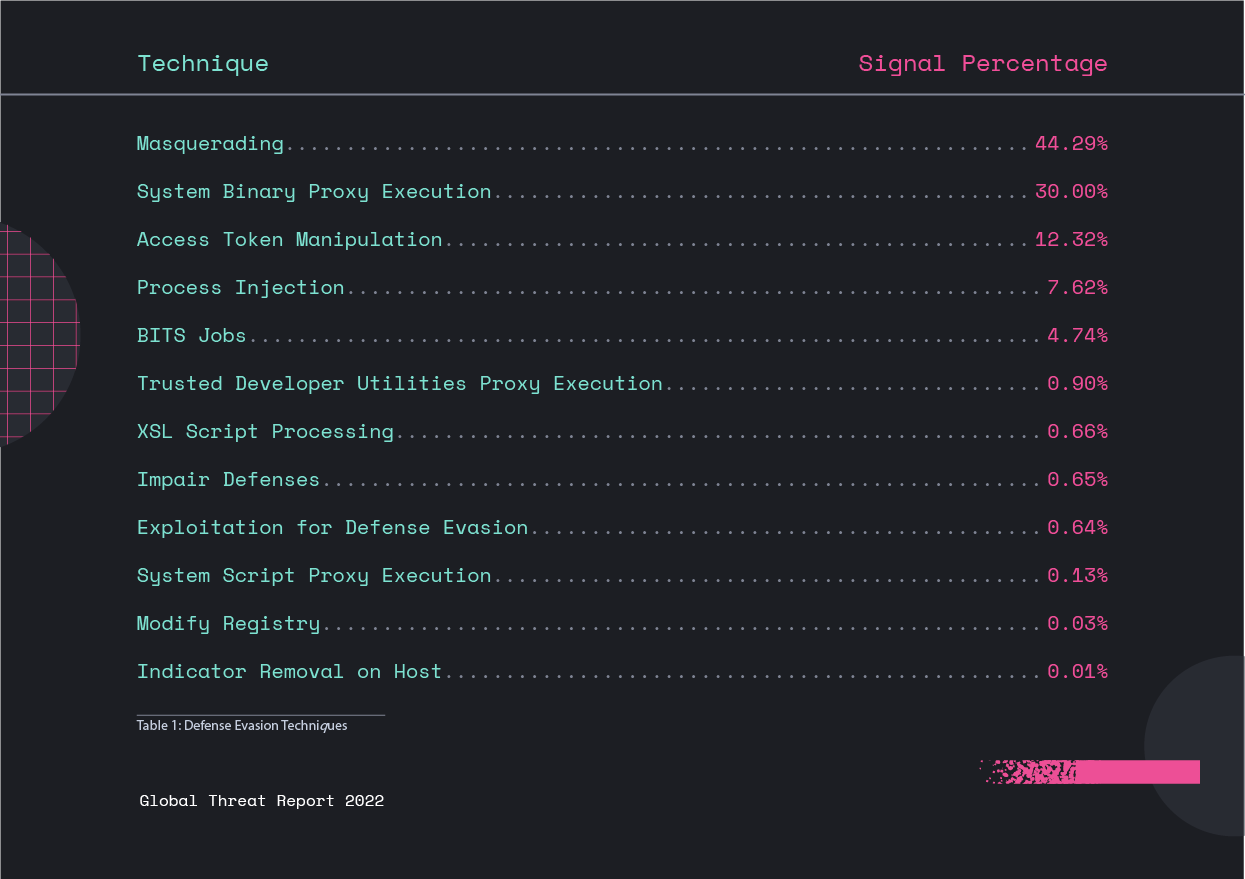
Elastic 2022 Global Threat Report Preview: Endpoint Defense Evasion and Credential Dumping Trends
Elastic Security Labs released a preview of its 2022 Global Threat Report, revealing that 72% of defense‑evasion tactics involve masquerading and proxy execution of system binaries, while 77% of credential‑access attempts rely on OS credential dumping with known utilities. The findings underscore the need for defenders to harden endpoint detection and improve credential‑management controls. Security teams should review their monitoring and response playbooks accordingly.
Read briefing
Elastic Security Labs Releases LLM Safety Assessment Report
Elastic Security Labs has published a new LLM safety assessment report that outlines practical threats to large language models and offers guidance for defenders. The report focuses on data mapping, normalization, and detection strategy for AI‑driven threats. SecOps teams should review the findings and start implementing the recommended detection steps.
Read briefing
NCSC Releases Strategic Assessment on AI Cyber Threat Landscape Through 2027
The UK's NCSC has published a formal assessment detailing how artificial intelligence will shape the cyber threat landscape over the next three years. The report synthesizes classified intelligence, industry data, and academic research to project capability trajectories for defenders and threat actors alike through 2027. SecOps and sysadmins should review these findings to anticipate shifts in automated attack vectors and adjust defensive baselines.
Read briefing