
Advisories
Elastic Launches Bounty Program for SIEM/EDR Rule Validation
Elastic has expanded its public bounty program to invite researchers to test and improve its SIEM and EDR detection rules on Windows endpoints. The initiative targets security teams using Elastic Security, encouraging them to review rule efficacy and report gaps. Defenders should monitor the HackerOne portal, review rule documentation, and incorporate findings into their detection strategy.

Elastic has opened a new chapter in its public bounty program, focusing on the validation of SIEM and EDR detection rules for Windows endpoints. The program invites external researchers to identify evasion or bypass techniques that could undermine Elastic Security’s built‑in rule sets. Security teams that rely on Elastic Security for log analytics and endpoint protection are the primary audience, as any gaps discovered will directly affect their detection coverage.
What Happened
Starting in December 2024, Elastic added a dedicated scope on its HackerOne platform for SIEM and EDR rule assessments. The bounty covers rule logic, false‑negative mitigation, and evasion testing, with rewards tied to the severity of the findings.
Impact
Defenders using Elastic Security will receive improved rule accuracy and resilience against advanced adversary techniques. The program also expands Elastic’s internal testing pipeline, complementing unit tests, smoke tests, and exercises like Locked Shields.
What to Do
- Check the Elastic Security rule documentation for the latest Windows endpoint rules.
- Register on the Elastic HackerOne page and review the bounty scope and reward structure.
- Run your own evasion tests against the published rules and report any gaps or false negatives.
- Incorporate validated rule updates into your SIEM and EDR deployments.
How to Participate
Researchers can submit findings through HackerOne, where Elastic’s security team will triage and reward valid reports. The program is open to all, with a focus on external validation rather than internal testing.
Related articles
Huntress Launches Platform One: Unified Endpoint, Identity, and Operational Security
Huntress has unveiled Platform One, a managed security offering that consolidates endpoint integrity, identity resilience, and operational readiness into a single dashboard. The release targets organizations already using Huntress services and expands capabilities across Managed EDR, Managed ITDR, and Managed SIEM. Defenders should review integration points, enable new detection engines, and update monitoring playbooks.
Read briefing
Elastic Launches Detonate: Automated Malware Testing for Elastic Security
Elastic released Detonate, a sandboxed platform that lets security teams run malware samples against their Elastic Security stack with minimal effort. The system automates VM provisioning, execution monitoring, and telemetry collection, enabling rapid validation of protection efficacy.
Read briefing
Huntress Launches Buyout Program to Enable Early Vendor Exit
Huntress has introduced a Buyout Program that lets customers terminate their security contracts early without penalty, covering the remaining term. The move gives defenders flexibility to switch vendors while maintaining continuous protection.
Read briefing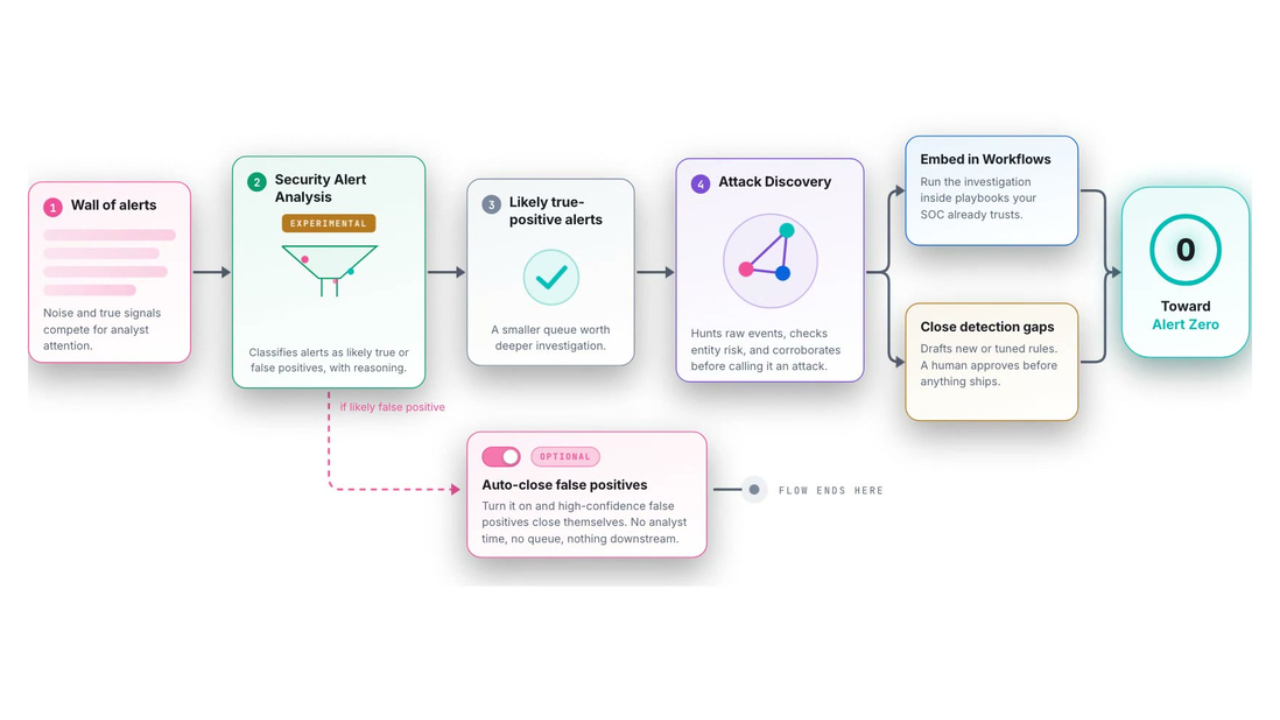
Elastic Launches AlertZero: AI‑Driven SOC Automation to Achieve Inbox Zero for Alerts
Elastic Security introduces AlertZero, an AI‑powered layer that automates alert triage, hunting, detection, and forensics through four dedicated agents. The system reduces queue volume, filters false positives, and proposes analyst‑approved actions, enabling teams to maintain full coverage without manual overload.
Read briefing