
Threat Intel
Storm‑3168: JADEPUFFER Compromised Service Principals Destroy Azure Resources
JADEPUFFER used compromised Azure service principals to enumerate, delete, and steal credentials from multiple resource types. Defenders must secure identities, enforce least privilege, rotate secrets, protect recovery resources, and enable Defender for Cloud to mitigate similar attacks.

What Happened
In June 2026, the threat actor JADEPUFFER, tracked by Microsoft as Storm‑3168, compromised two service principals in a single Azure tenant. One principal performed reconnaissance, enumerating VMs, subscriptions, and resource groups for over 15 hours. The other carried out destructive operations—deleting storage accounts, SQL databases, Key Vaults, Function Apps, recovery protection locks, VMs, and App Services—and collected credentials for future exfiltration.
Impact
The attacks caused widespread resource deletion and credential theft across the tenant’s Azure environment. Publicly exposed credentials remained active until revoked or rotated, allowing the actor to maintain persistence and expand the damage.
Publicly exposed credentials remain usable until revoked or rotated.
Mitigation
Defenders should:
- Secure workload identities and secrets, enforcing least privilege for service principals.
- Rotate or revoke exposed credentials immediately and audit for lingering secrets.
- Protect recovery resources such as protection locks and backups.
- Enable Microsoft Defender for Cloud protections and monitor for anomalous read/write activity.
AI‑Driven Defense
Storm‑3168 demonstrates AI‑orchestrated attacks that coordinate large‑scale post‑compromise actions. To keep pace, defenders should adopt AI‑assisted investigation tools (e.g., Project Perception, MDASH) to automate detection and response across complex cloud environments.
Related articles

JadePuffer AI‑Driven Attacks Target Azure Tenants, Destroy Storage and Key Vaults
The JadePuffer ransomware operator has been using AI agents to automate attacks against Azure tenants, mapping resources, stealing credentials, and deleting critical storage and key vaults. Over 100 storage accounts were wiped in a seven‑minute window, though some survived due to resource locks. Defenders should enable resource locks, audit service principals, and monitor for anomalous API activity.
Read briefing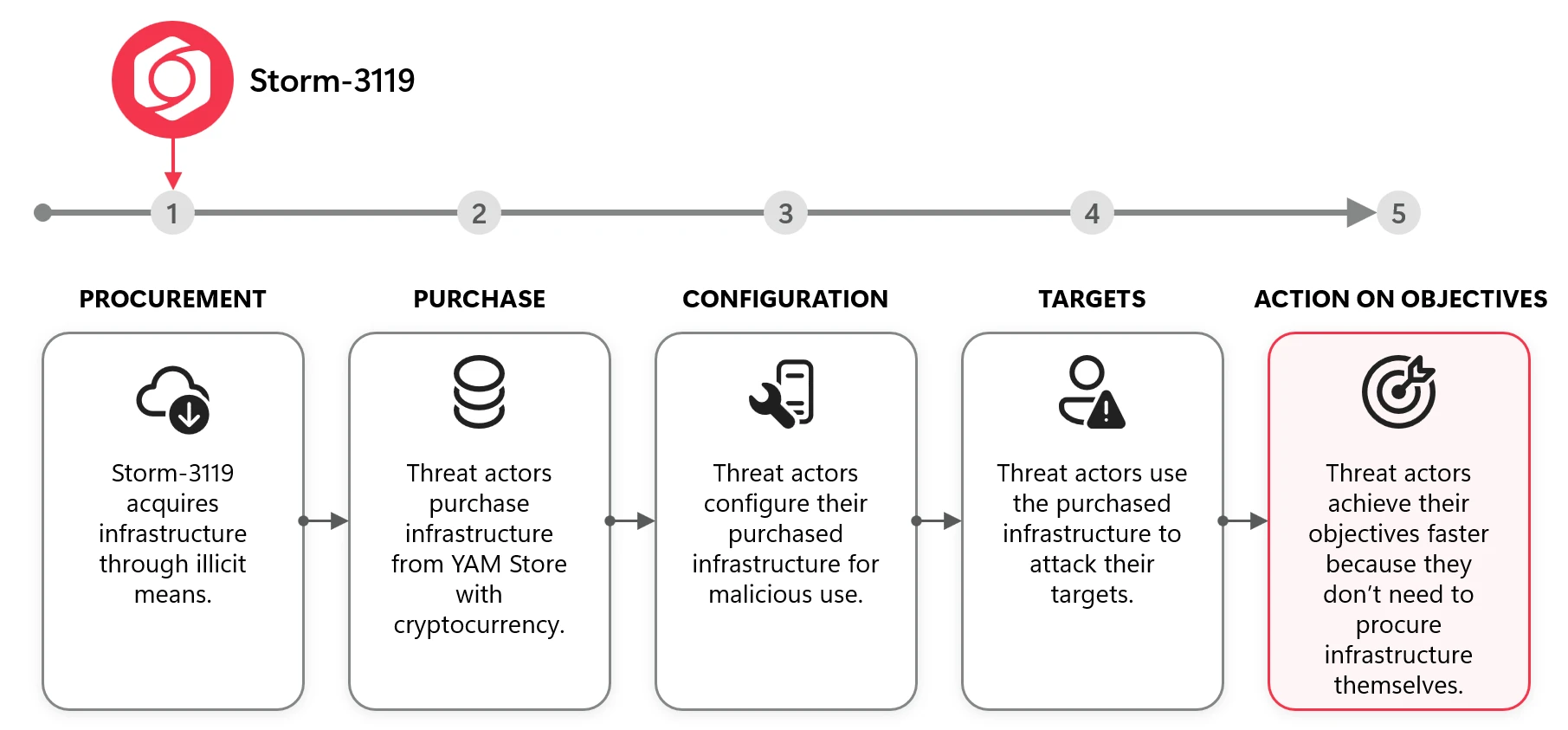
Disruption of Chinese Phishing Kit Ecosystem: Storm-2990 & YAM Store
Microsoft’s Digital Crimes Unit exposed a Chinese‑language phishing kit ecosystem, including the Storm‑2990 developers and the YAM Store marketplace (Storm‑3119). The network distributed over 1 billion phishing emails and SMS to more than 75 000 organizations in healthcare, finance, wholesale, and IT sectors across Japan, the U.S., Australia, and India. Defenders should block known phishing kit domains, monitor for compromised cloud credentials, and apply Microsoft Defender detections.
Read briefing
Cisco Faces Multi‑Vulnerability Storm – Remote Code, Privilege Escalation & DoS
Cisco’s latest advisory reveals a cascade of flaws across ASA, FMC, FTD and ISE platforms. Several CVEs enable attackers to execute code remotely, elevate privileges, and trigger denial‑of‑service attacks. Notably, CVE‑2026‑76460 is actively exploited. Versions 3.2 and 3.1 of ISE are unsupported and lack patches for multiple critical bugs. Immediate patching and hardening are required to protect network infrastructure.
Read briefing
RootPwn Weekly: Airport Breach, ATF, Boston Scientific, McKesson, AI Threats, and Critical Vulnerabilities
This week’s intel reveals a massive data leak at Manchester Airports Group affecting 8.7 million passengers, a compromised ATF system, and network outages at Boston Scientific. McKesson’s 284 million‑record breach stemmed from vishing‑driven Okta takeovers. AI researchers exposed new injection techniques and a phishing‑as‑a‑service platform. Meanwhile, PaperCut, Ubiquiti, Vercel, and ServiceNow rolled out emergency fixes for CVSS 10 zero‑day flaws that could grant remote code execution.
Read briefing