
Threat Intel
ClickFix Attack: Rapid Detection and Response with Huntress Attack Disruption
A new variant of the ClickFix malware bypasses traditional file‑based defenses by executing in memory. Huntress’s Attack Disruption module stops the payload chain in under a second, preventing credential theft and lateral movement. SecOps teams should enable Attack Disruption, monitor for suspicious process chains, and update endpoint policies accordingly.
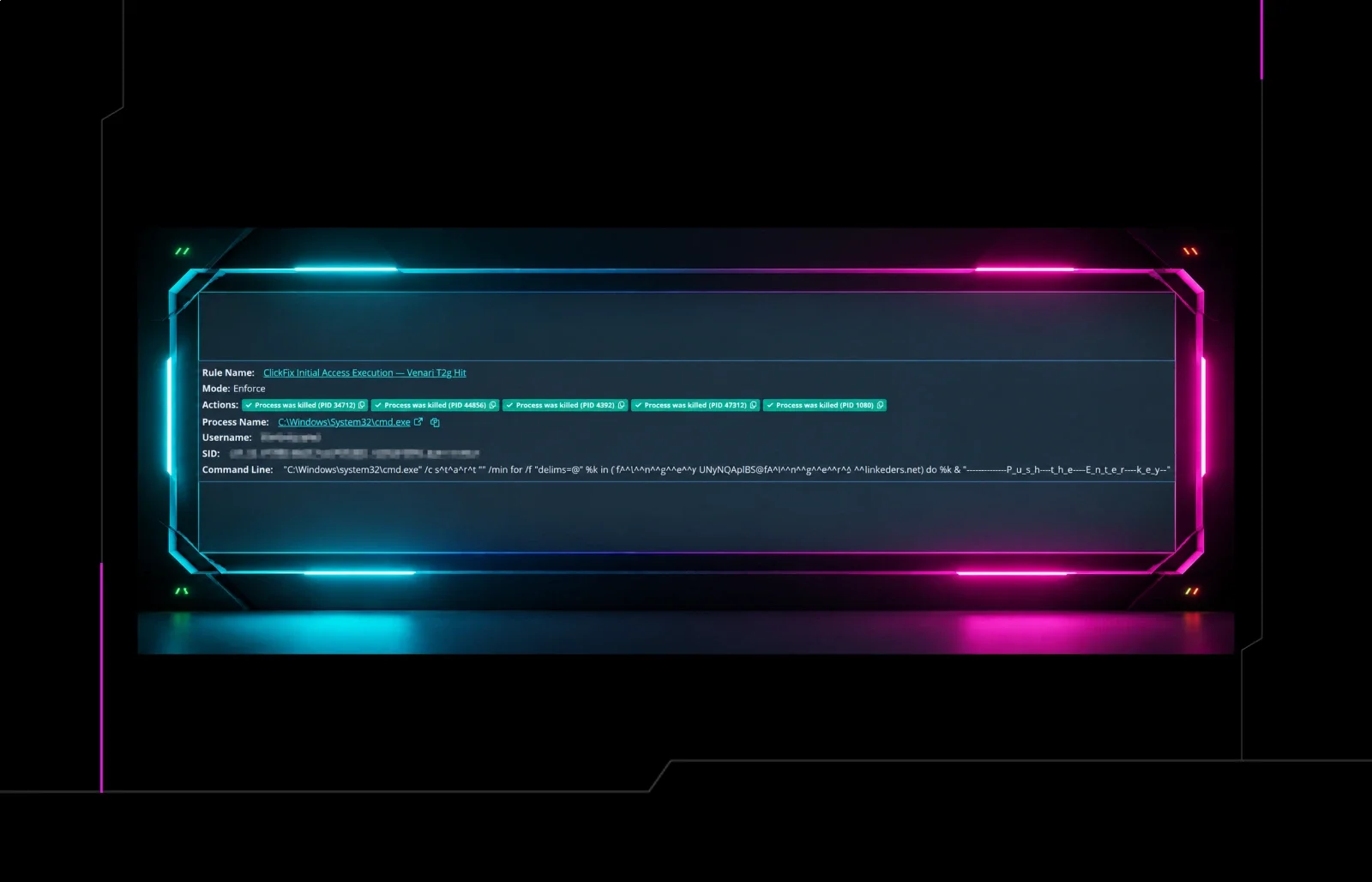
ClickFix is a living‑off‑the‑land malware that injects itself into legitimate processes and never writes a file to disk. Because it remains in memory, most endpoint scanners miss it, allowing attackers to steal credentials and pivot laterally.
What happened
In a recent campaign, attackers used ClickFix to compromise a corporate network. The malware was delivered via a phishing link, then executed in memory, bypassing file‑based detection.
How Huntress detects it
Huntress’s Attack Disruption engine monitors process creation and inter‑process communication in real time. When it identifies the characteristic chain of DLL injection and credential dumping, it terminates the chain in less than one second, breaking the attack before any data is exfiltrated.
What defenders should do
- Enable Attack Disruption on all endpoints and verify it is active.
- Review EDR logs for suspicious DLL injection patterns and block the associated binaries.
- Apply the latest Huntress policy updates that include ClickFix signatures.
- Conduct phishing awareness training to reduce initial infection vectors.
“Rapid disruption is the only way to stop in‑memory attacks like ClickFix before they can pivot.” – Huntress SOC Lead
Related articles
Salient Botnet Disruption: CrowdStrike & Partners Neutralize Sality P2P Network
CrowdStrike, together with law‑enforcement and industry partners, carried out a coordinated operation that dismantled the Sality peer‑to‑peer botnet. The disruption severed the command‑and‑control infrastructure and isolated infected hosts. Defenders should validate detection rules, patch vulnerable systems, and monitor for residual activity.
Read briefing
Defending Against Cross-Environment Pivots in Modern Enterprise Security Operations
Recent threat intelligence highlights a significant operational challenge for SecOps teams: adversaries are routinely pivoting across multiple enterprise environments to evade detection. According to recent incident response data, nearly half of all attacks span four or more attack surfaces, exploiting visibility gaps in siloed security tooling. Defenders must unify telemetry across cloud, endpoint, network, identity, and SaaS domains to successfully reconstruct complex attack paths.
Read briefing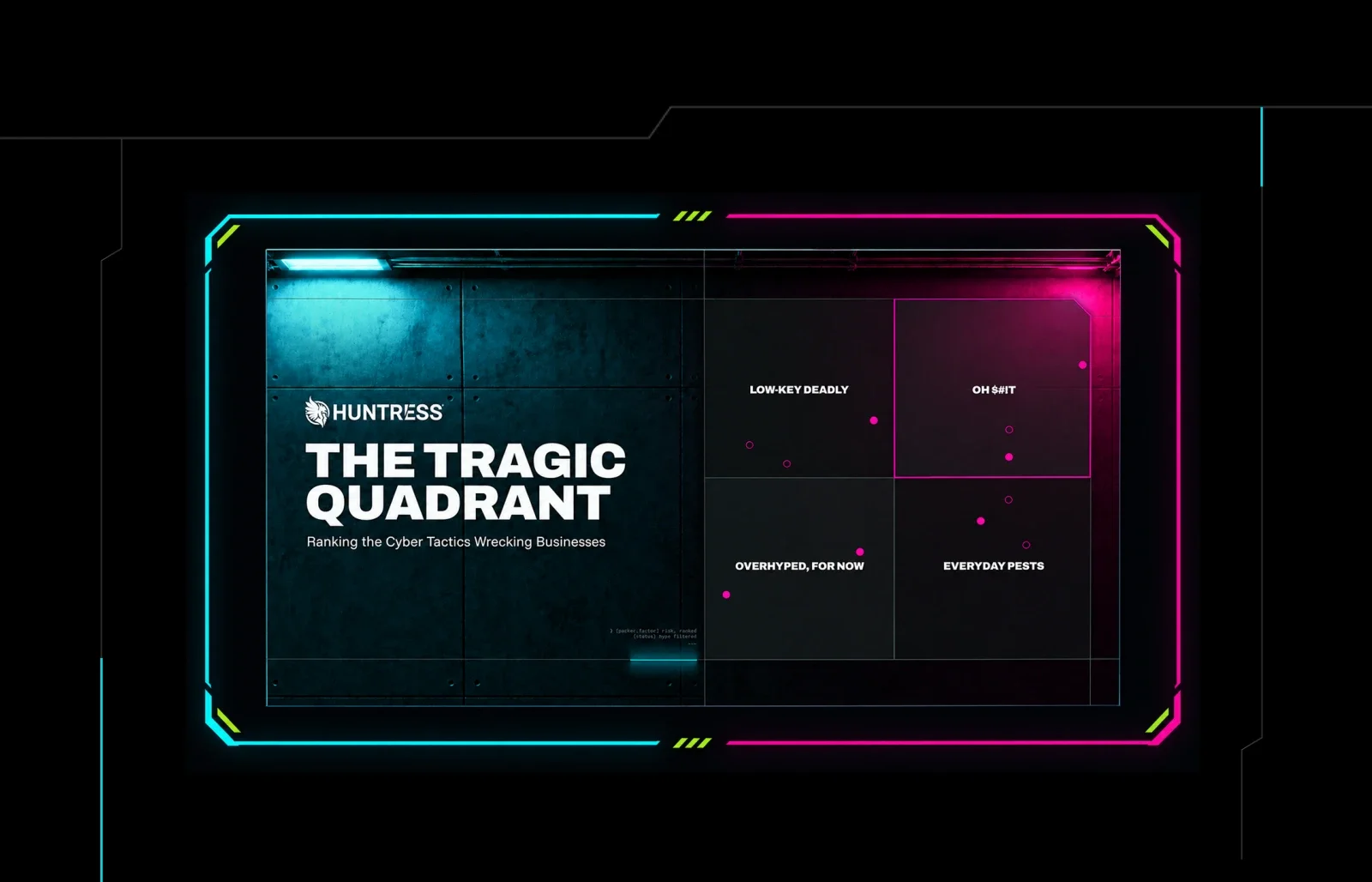
Huntress Tragic Quadrant Highlights RMM Abuse, AiTM, and ClickFix as Top Threats for Businesses
The Huntress Tragic Quadrant ranks the most damaging cyber threats to enterprises, spotlighting Remote Management Tool abuse, Account Impersonation via AiTM, and the ClickFix phishing framework. Defenders must prioritize endpoint visibility, email hardening, and user training to counter these tactics. Immediate actions include patching RMM software, tightening MFA, and deploying anti‑phishing solutions.
Read briefing
CrowdStrike SafeMind: Closed‑Loop Offense‑Defense Enhances Falcon Security
CrowdStrike’s SafeMind platform turns simulated offensive tests into continuous defensive improvements. By feeding attack simulations back into Falcon, defenders receive hardened detection rules and faster response. Integrate SafeMind into your SOC to sharpen detection and reduce dwell time.
Read briefing