
Threat Intel
Warlock Attack: TightVNC, Yuze, and NSec Driver Persistence
Warlock has expanded its toolset with TightVNC, Yuze, and a BYOVD technique that loads the NSec driver, enabling persistent footholds, lateral movement, and stealth. Defenders should detect VNC usage, Yuze binaries, and the NSec driver, then apply Trend Micro updates and harden kernel driver controls.

What happened
Warlock has added new components to its toolkit, including the remote‑control software TightVNC, the Yuze backdoor, and a BYOVD persistence method that loads the NSec driver. These additions allow the malware to maintain footholds, move laterally, and hide from detection.
Impact
Systems infected with Warlock can now establish VNC sessions for remote control, deploy Yuze binaries that bypass standard sandbox checks, and keep the NSec driver resident in memory, making removal difficult. Attackers can exfiltrate data or deploy ransomware after establishing persistence.
What to do
- Inspect for the TightVNC executable (tightvnc.exe) and Yuze binaries in unexpected locations.
- Use endpoint detection to flag VNC traffic on non‑standard ports and block outbound connections to known Warlock C2 IPs.
- Scan for the NSec driver (nsec.sys) in the system driver directory; remove or quarantine it and patch the kernel driver loading mechanism.
- Apply the latest Trend Micro security updates that detect Warlock signatures and block the BYOVD technique.
- Conduct a full forensic review of compromised hosts and isolate them until clean.
Mitigations
Deploy network segmentation to limit lateral movement, enforce strict application whitelisting, and enable kernel‑mode driver signing enforcement. Regularly update threat‑intel feeds and maintain an up‑to‑date signature database.
Related articles

Fake LastPass Installers Deploy Kernel-Driver EDR Killer and Rapuncel Infostealer
A campaign using counterfeit LastPass Authenticator apps has pushed a Microsoft‑attested kernel driver that disables 145 security products and installs the Rapuncel infostealer. The attack leveraged GitHub and Cloudflare to distribute the malicious payload, impersonating at least 40 organizations. Defenders should block the malicious driver, verify kernel modules, and update EDR signatures.
Read briefing
EDR Killers: How Attackers Exploit Drivers to Disable Endpoint Detection
ESET researchers analyzed nearly 90 EDR‑killer tools used in ransomware campaigns, revealing that attackers routinely deploy vulnerable drivers or driverless tactics to suspend or block EDR software before launching encryption. The study shows driver reuse across unrelated toolsets and highlights the pitfalls of attributing attacks solely by driver signatures. Defenders should monitor driver installation, block unauthorized driver loads, and enforce EDR integrity checks.
Read briefing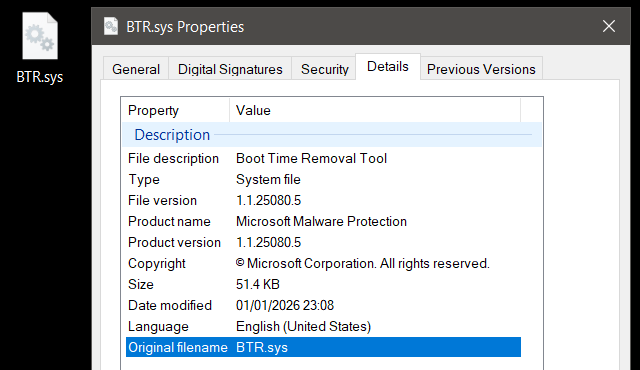
BTR Reforged: Turning a Signed Windows Defender Driver into a Kernel‑Level Attack Engine
Checkpoint Research has shown that Microsoft’s own BTR.sys – the Boot‑Time Removal driver used by Windows Defender – can be hijacked to perform arbitrary file and registry operations from Ring 0. By reverse‑engineering the driver’s encrypted transaction format and building a tool called BTR_CLI, researchers demonstrated a kernel‑mode operation primitive that bypasses EDR/AV without exploiting a vulnerability. The study exposes how trusted signed components can become powerful attack tools, urging defenders to scrutinize remediation drivers and implement stricter driver‑loading controls.
Read briefing
Advanced Linux Persistence Detection: New Guidance on Init Scripts and Custom Tools
Elastic Security’s latest Linux persistence series expands beyond Systemd to cover System V and Upstart init scripts, and introduces PANIX for testing persistence. Defenders can now deploy pre‑built detection rules, audit critical init directories, and validate coverage with the new tool.
Read briefing